Dipping Into Raclette: From Alpine Origins to a Year-Round Ritual
Once associated almost exclusively with cold weather and ski trips, raclette is now at the center of a foodie debate: is it a seasonal indulgence, or a dish that defies the calendar altogether? Dan Latif takes us to an International Raclette Day celebration in Paris to explore why raclette endures.
International Raclette Day: Raclette in the Spotlight
If you weren’t aware, December 13th marks International Raclette Day. To celebrate the occasion, SEB, one of the world’s largest cookware manufacturers, hosted the SEB Paris Raclette Day at the mythical Publicis Drugstore, located on the Champs-Élysées in Paris, France.
A legendary venue with a famously expansive offering of provisions, Publicis also offers views of both the avenue and the Arc de Triomphe. With Christmas decorations and festive lights around the shop, raclette settles in as an obvious choice, amid the aromas of melting cheese and a gaze cast upon one of the world’s most iconic roads.
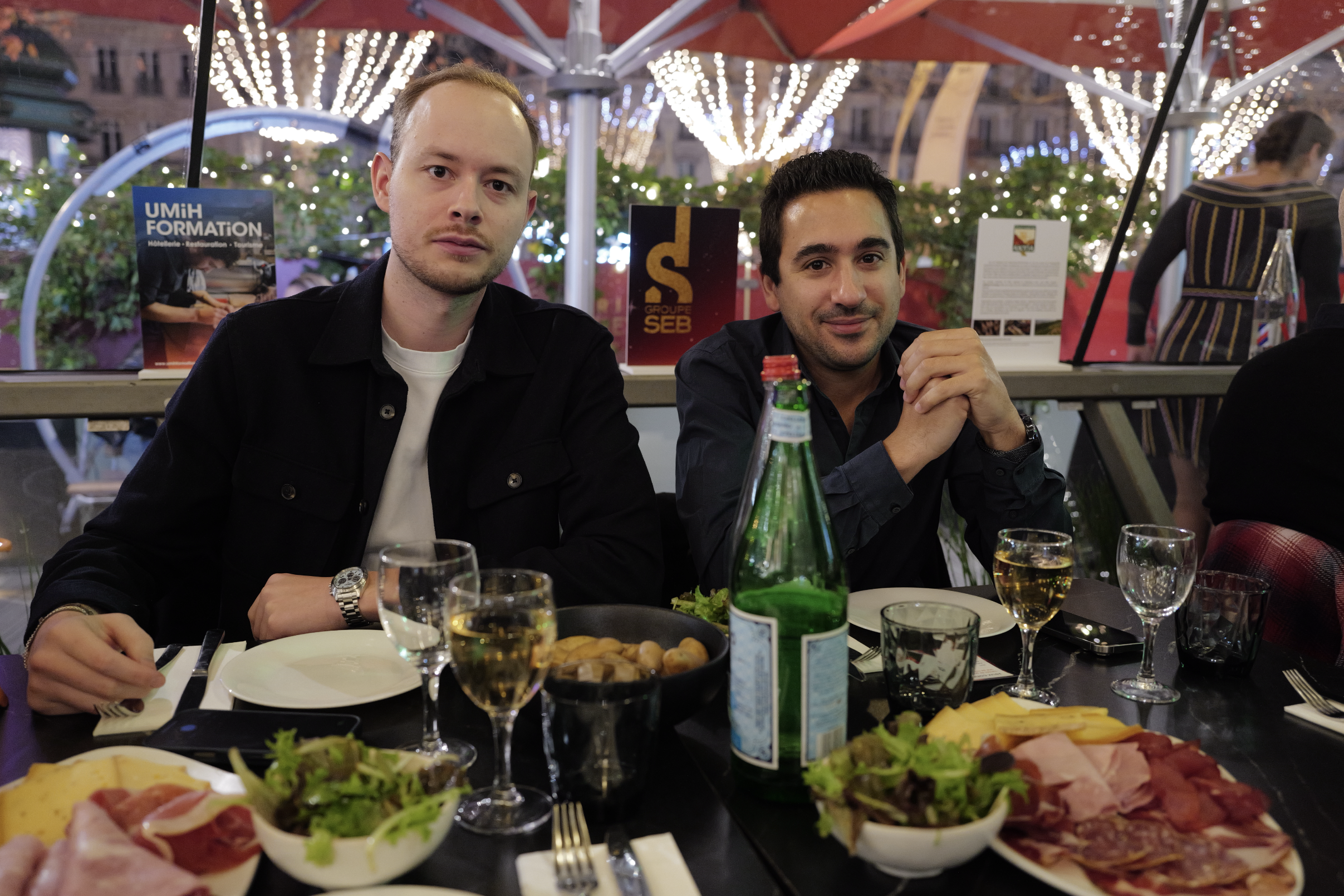
Guests enjoying raclette at International Raclette Day. Image: Dan Latif.
The event, hosted only for the occassion, was made possible thanks to the volunteers of Les Toques Françaises, whose mission is to share and promote French gastronomy around the world. Thanks to their commitment, a continuous service was provided from 11 a.m. to 10 p.m., serving a total of more than 1,200 guests.
What is Raclette?
Raclette often appears incidentally—on a menu, at a group dinner, or in a mountain restaurant—without much explanation. Order it, and melted cheese is brought to the table and scraped generously over potatoes and charcuterie, and the dish unfolds from there. A dash of nutmeg brings some additional depth. While the simplicity is deceptive, raclette is a tradition.
The origins of raclette date back to the Middle Ages, in Switzerland, particularly in the canton of Valais, near the Matterhorn. At the time, Valais shepherds would heat their cheese over an open wood fire before scraping it onto bread or potatoes. A simple, rustic gesture that would later give the dish its name.
“We ask ourselves far too many questions before eating raclette: ‘Is it the right season? Is it cold enough?’”
The signature cheese used is now known as Raclette du Valais AOP, a semi-hard selection, traditionally made from raw cow’s milk— rich and nutty and specifically intended to be heated.
In France, raclette truly arrived in the 1970s, with the first electric appliances allowing the cheese to be melted directly at the table emerged. From that point on, conviviality became inseparable from the dish.
Cheeses, Preparations and Freedom
For the tasting event at Publicis, the offering included a particularly refined raclette from Meilleur Ouvrier de France (Best Craftsman of France), Mr. Janier. These days, raclette comes in countless variations to suit every taste: infused with truffle, pepper, mustard seeds, white wine, smoked, or garlic.
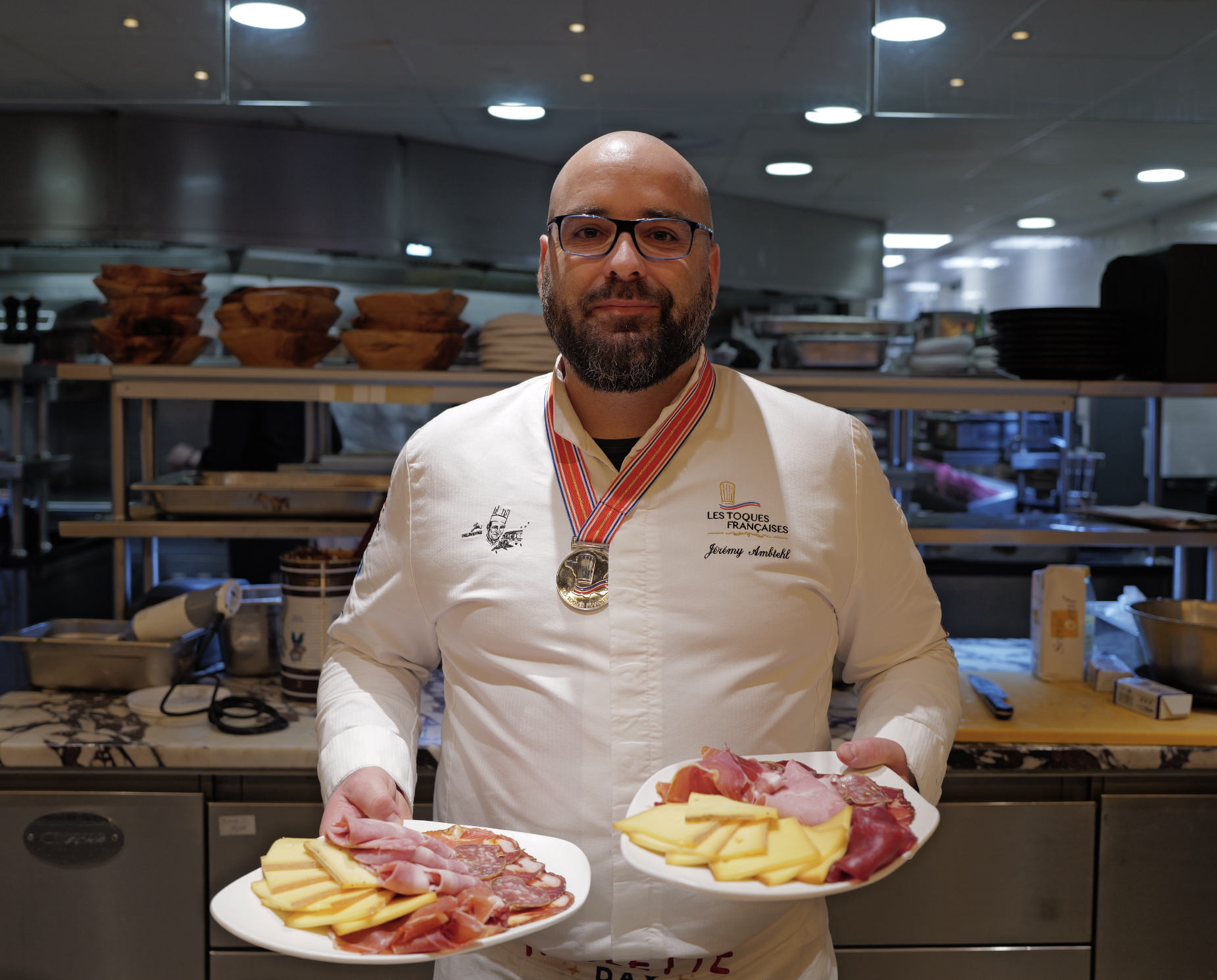
A volunteer for Les Toques Françaises offering individual servings of raclette. Image: Dan Latif.
Legend has it that a true raclette relies on an essential trio: cheese, cured meats and potatoes. But other vegetables are always welcome, and it would be a shame to go without them.
Raclette as a dining activity can also be reimagined using morbier, Montagnette d’Aydius with Jurançon wine, or even Saint-Nectaire, which brings remarkable creaminess and melt-in-the-mouth texture. And above all, never forget the essentials: gherkins, onions, and salad.
Is Raclette Only for Winter?
Clément Cavadore, a devoted raclette fan and an attendee of the International Raclette Day celebration, says it is time to put the debate to rest regarding a “season” for raclette: “We should stop talking about a raclette season — raclette season lasts all year.” Indeed—particularly in the United States and Germany—raclette has increasingly been treated as a winter food, facing the same seasonally associative problem as ramen.
Former Swiss ambassador and diplomat Raimund Kunz, supports the idea that raclette is good for any time of year. I once had the pleasure of enjoying raclette with him on August 1st at the Swissôtel The Bosphorus in Istanbul. The temperature then was in excess of 35 degrees Celsius but the raclette went down fine. Proof, if any were needed, that raclette pays little attention to the thermometer.
Yann, a French chef and restaurateur, goes in for the kill: “We ask ourselves far too many questions before eating raclette: ‘Is it the right season? Is it cold enough?’ And afterwards we feel guilty, because it’s true — it’s not the lightest dish. But in the end, we should eat it all year round, and it ought to be reimbursed by social security.”
How to Make Raclette At Home
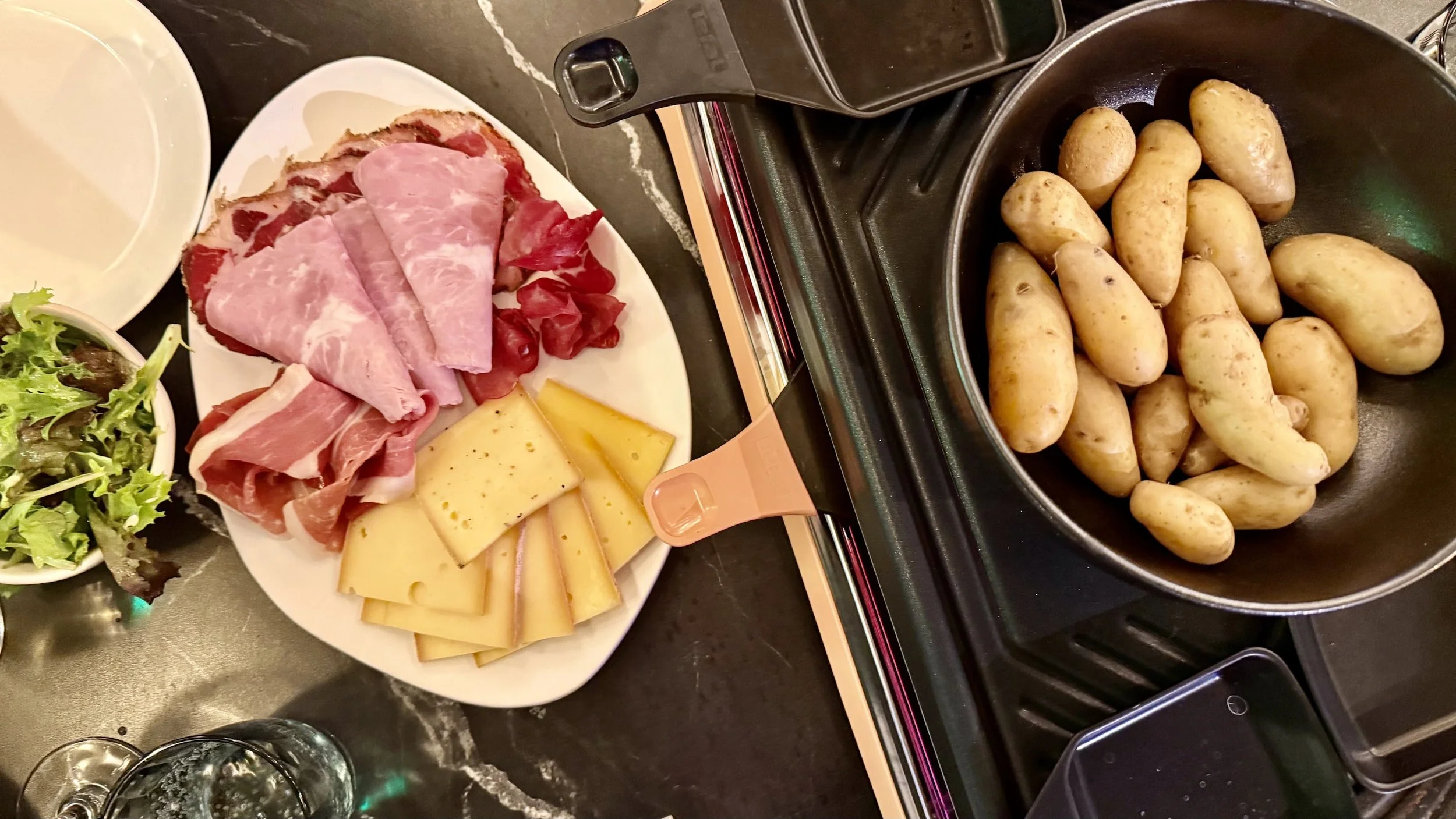
Raclette with typical accompaniments. Image: Jordan Rey.
What you’ll need:
Raclette cheese (ideally Raclette du Valais AOP), sliced
Small fondue set ($269.00 at All-Clad)
Waxy potatoes (Yukon Gold or fingerlings), boiled in their skins
Assorted cured meats (prosciutto, jambon cru, salami)
Cornichons and pickled onions
Optional: salad greens, black pepper, nutmeg, white wine or tea
How it’s done: Boil the potatoes until tender and keep them warm. Set the raclette grill at the center of the table. Place slices of cheese in the set and melt until bubbling and just beginning to brown. Scrape the melted cheese over potatoes and accompaniments, season lightly, and repeat at an unhurried pace.












We've gone around the world looking for unique summer cocktails, finding recipes inspired by Korean rock water, English botanicals, Italian aperitifs, and New York hotel bars. Here are a few of our favorites for the season that you can make at home, from a bright highball to an over-the-top seafood Bloody Mary.