Visting Vaux-le-Vicomte: Fouquet, the Vogüé Family and the Return of Water to the Gardens (Exclusive Photos)
At Vaux-le-Vicomte, the restoration of the château’s Grottoes brings together centuries of architecture, landscape, family stewardship and spectacle. The Interior Review learns from custodian Alexandre de Vogüé as he takes us through an estate shaped by Nicolas Fouquet, Le Vau, Le Brun and Le Nôtre.
Vaux-le-Vicomte: An Underrated Gem in the Suburbs of Paris
After traveling some fifty kilometers or thirty-one miles from Paris, we arrive at the gates of Vaux-le-Vicomte, the estate commissioned by former finance minister and arts patron Nicolas Fouquet in 1658. Immediately, we meet Alexandre de Vogüé, the fifth-generation family steward who oversees patronage, collections and external relations for the estate. His familiarity with the place is evident as he quickly drops the formal name, referring to the estate as simply “Vaux”.
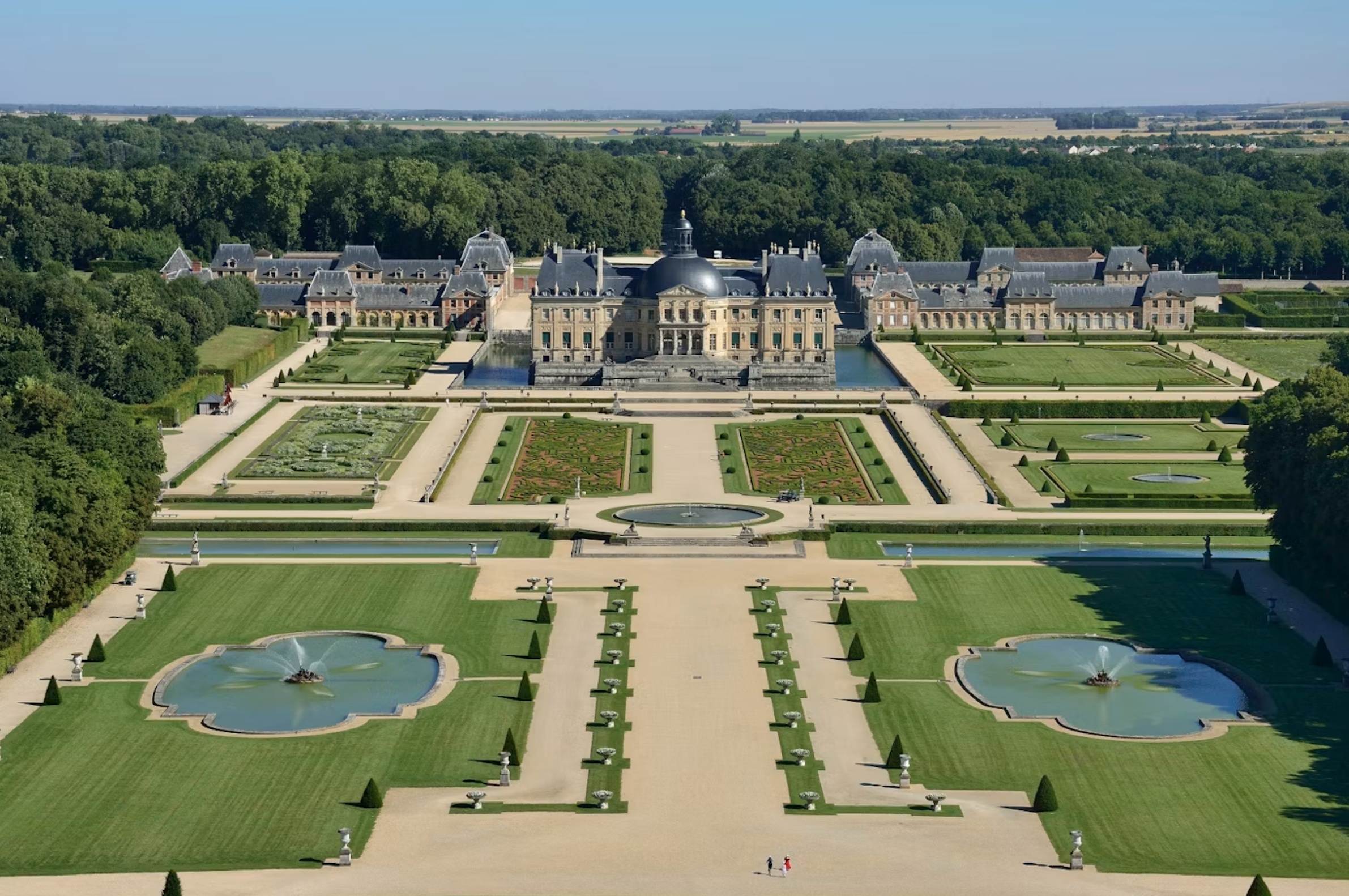
Vaux-le-Vicomte from above. Image:
Given its monumental scale, Vogüé offers to take us around the estate by golf cart rather than by foot. This is where the visit truly begins, following the rhythm of the perspectives as they unfold one after another.
Beside me, and proving himself an excellent driver, is Tobias Larsson, an artistic director for theatre, observes the natural sense of staging that defines the estate: “A place like this is so dramatic in itself that you don’t want to compete with it.” A few moments later, he admits that the ideal way to travel through these gardens would probably have been on horseback.
For Alexandre de Vogüé, the estate can never be understood in separate parts. Château, gardens, water and architecture were conceived together. “You shouldn’t think of Vaux-le-Vicomte as a park, a garden and a château, but as a whole,” he explains. Didier Repellin, Chief Architect of Historic Monuments, also evokes this harmony between architecture, decorative arts, landscape, water and human ingenuity.
Nicolas Fouquet and the Creation of Vaux-le-Vicomte
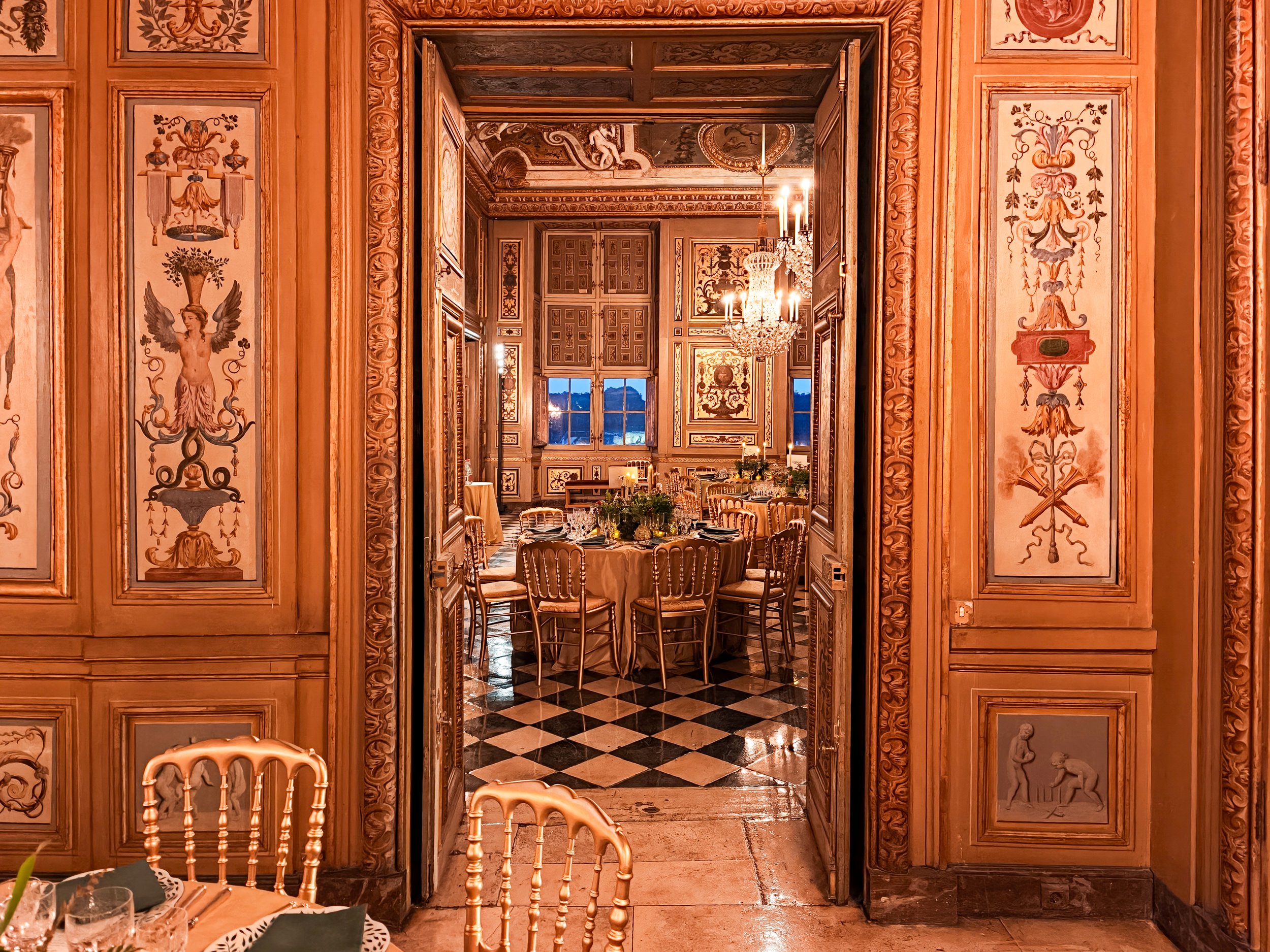
Present day view of state rooms at the Vaux-le-Vicomte, arranged for a dinner. Image: Dan Latif.
The history of the château inevitably leads back to Nicolas Fouquet. Our host recalls Fouqet’s desire to create something entirely new, capable of astonishing all those who passed through the gates. “Fouquet wanted to blow everyone’s mind,” he sums up. The scale of the estate, the gardens, the fountains and the performances all played a part in that display.
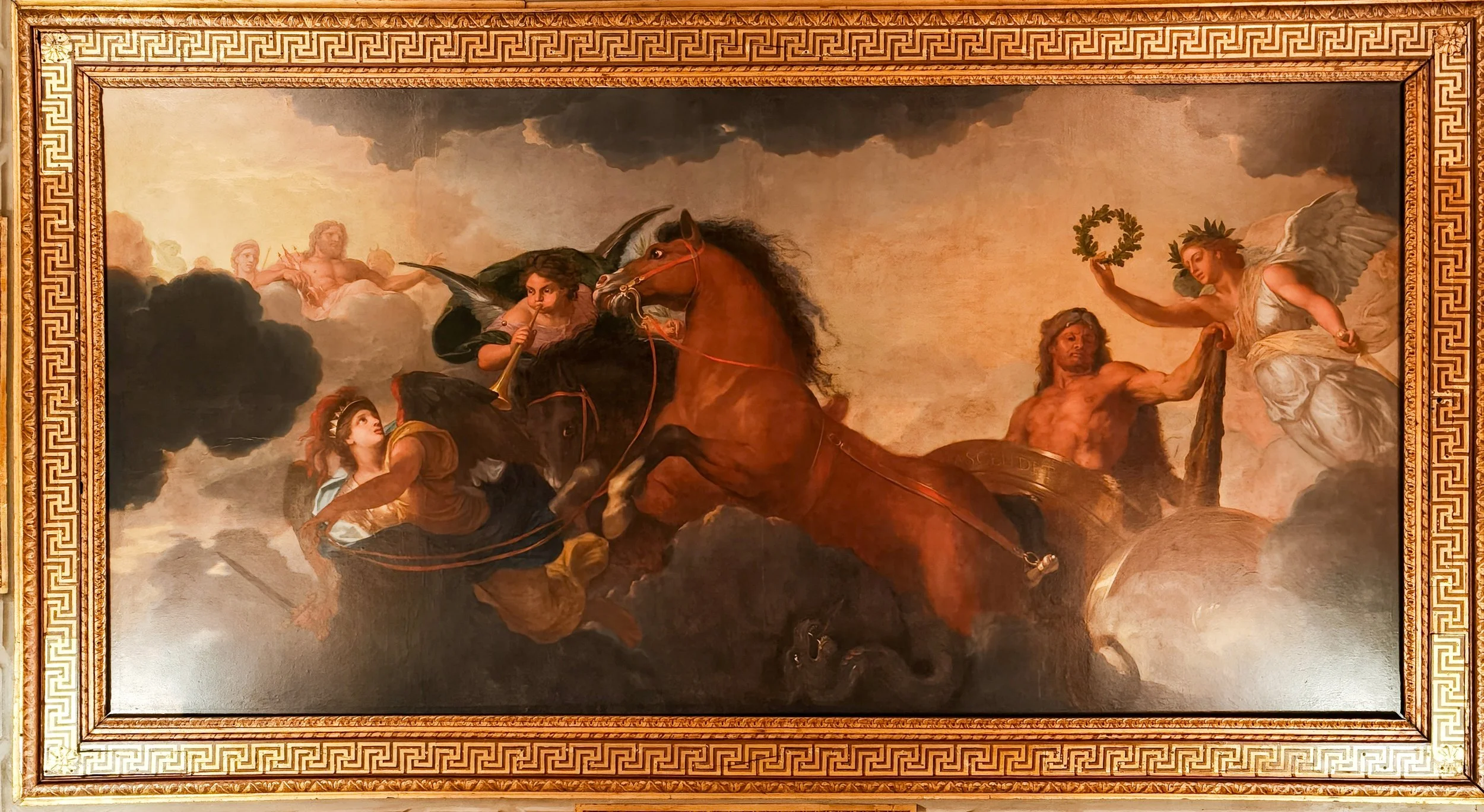
A state room ceiling panel by Charles Le Brun (1619–1690) at Vaux-le-Vicomte. Image: Dan Latif.
Fouquet commissioned the best of the era to complete the estate: Architect Louis Le Vau, painter Charles Le Brun and landscape architect Alexandre Le Nôtre worked in such close proximity here that it can sometimes be difficult to determine where one ends and another begins.
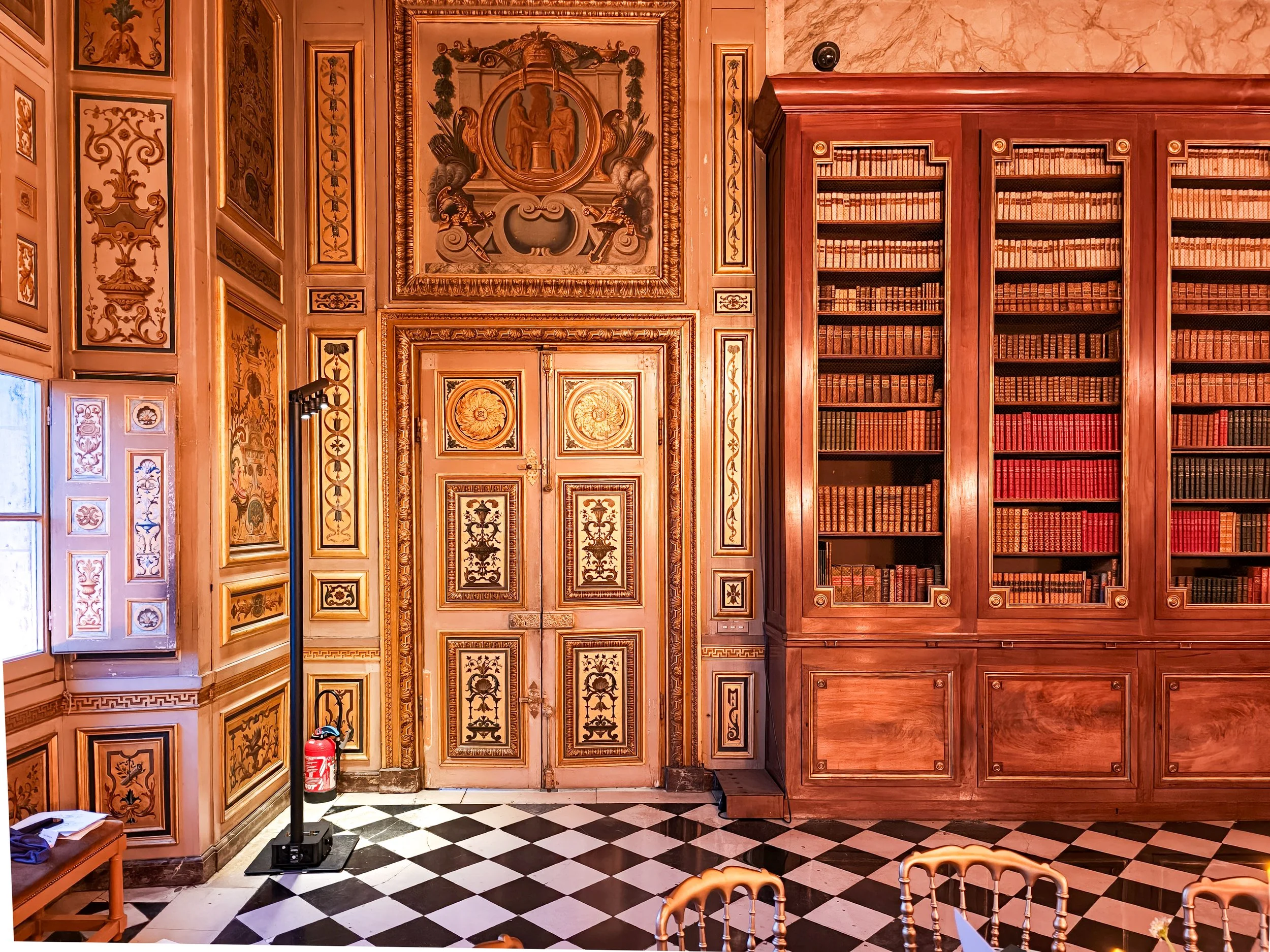
Present-day view of a library at the Vaux-le-Vicomte, once a chamber. Image: Dan Latif.
His selections proved influential: six years later, Louis XIV would employ the same artists at Versailles: Le Vau, Le Brun and Le Nôtre. “Louis XIV took exactly the same artists: the painter-decorator, the landscape designer and the architect,” Alexandre de Vogüé recalls, also pointing out that Louis XIV was inspired by the way Fouquet had used art as an instrument of power.
The Vogüé Family: Five Generations in Vaux-le-Vicomte
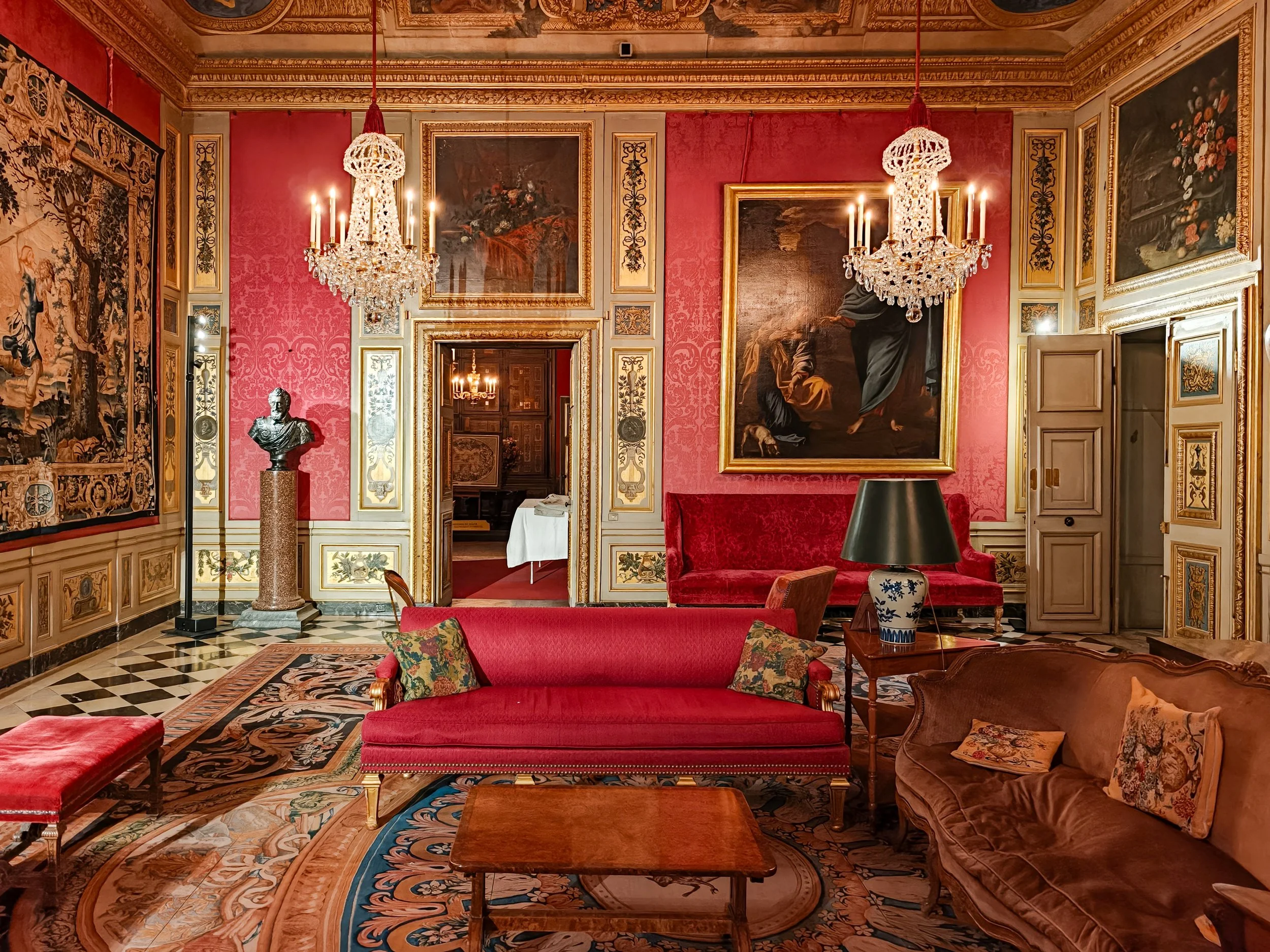
Present day view of a state room at the Vaux-le-Vicomte. Image: Dan Latif.
Now, for the Vogüé family, Vaux is a family story. In 1968, Alexandre’s father received the château from his own father as a wedding gift. “He used to tell us that in his day, you didn’t say 'no to your father',” Alexandre recalls, before adding, amused, that he and his two brothers said “no” to theirs far more often.
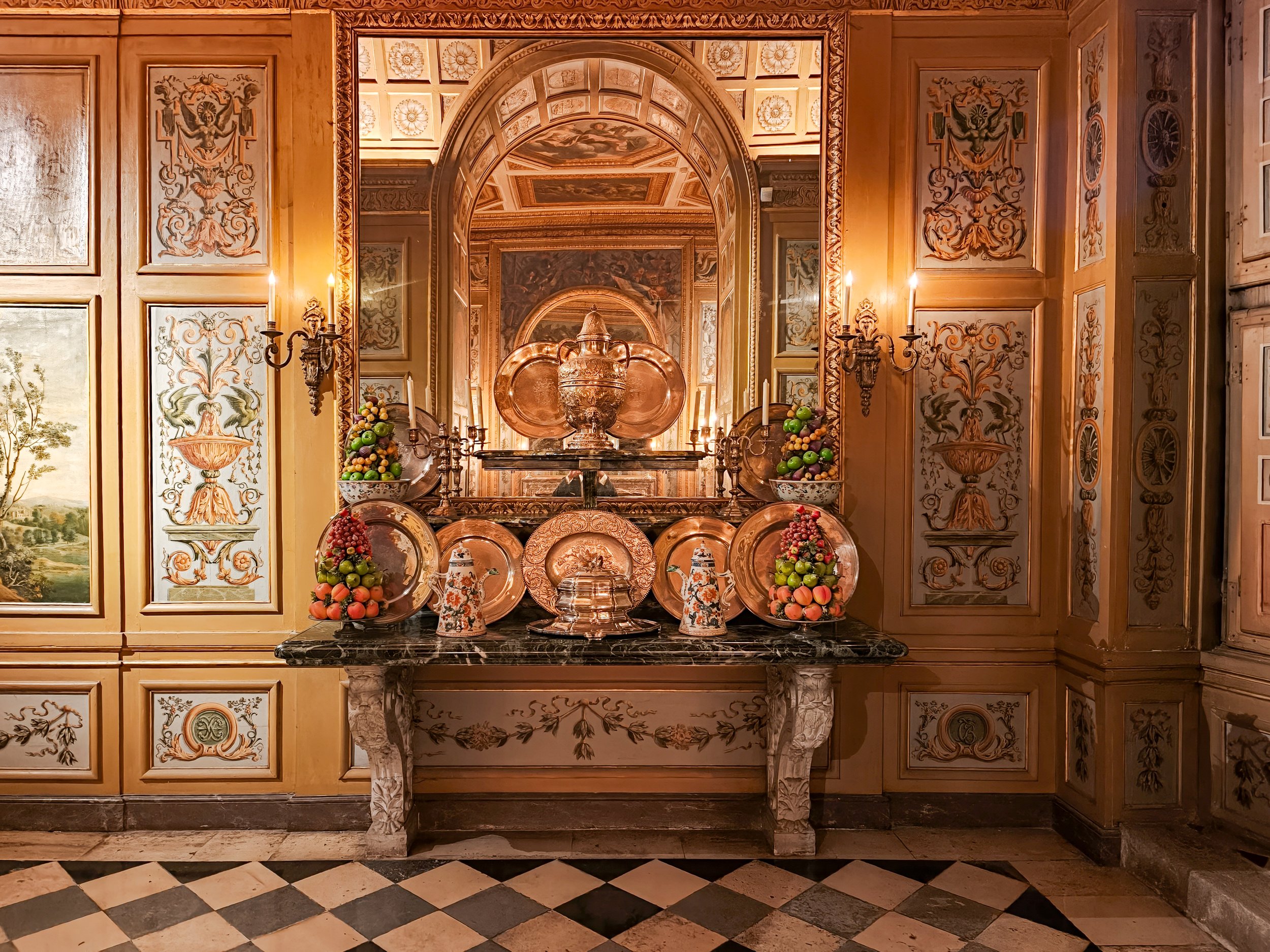
A state room banquette at the Vaux-le-Vicomte. Image: Dan Latif.
As the resources required to maintain the estate became increasingly considerable, his father decided to open it to the public. Yet the château remained very much a family home. The Vogüés lived upstairs, while some of the rooms on the ground floor were still part of everyday life. One of the state rooms even houses the television.
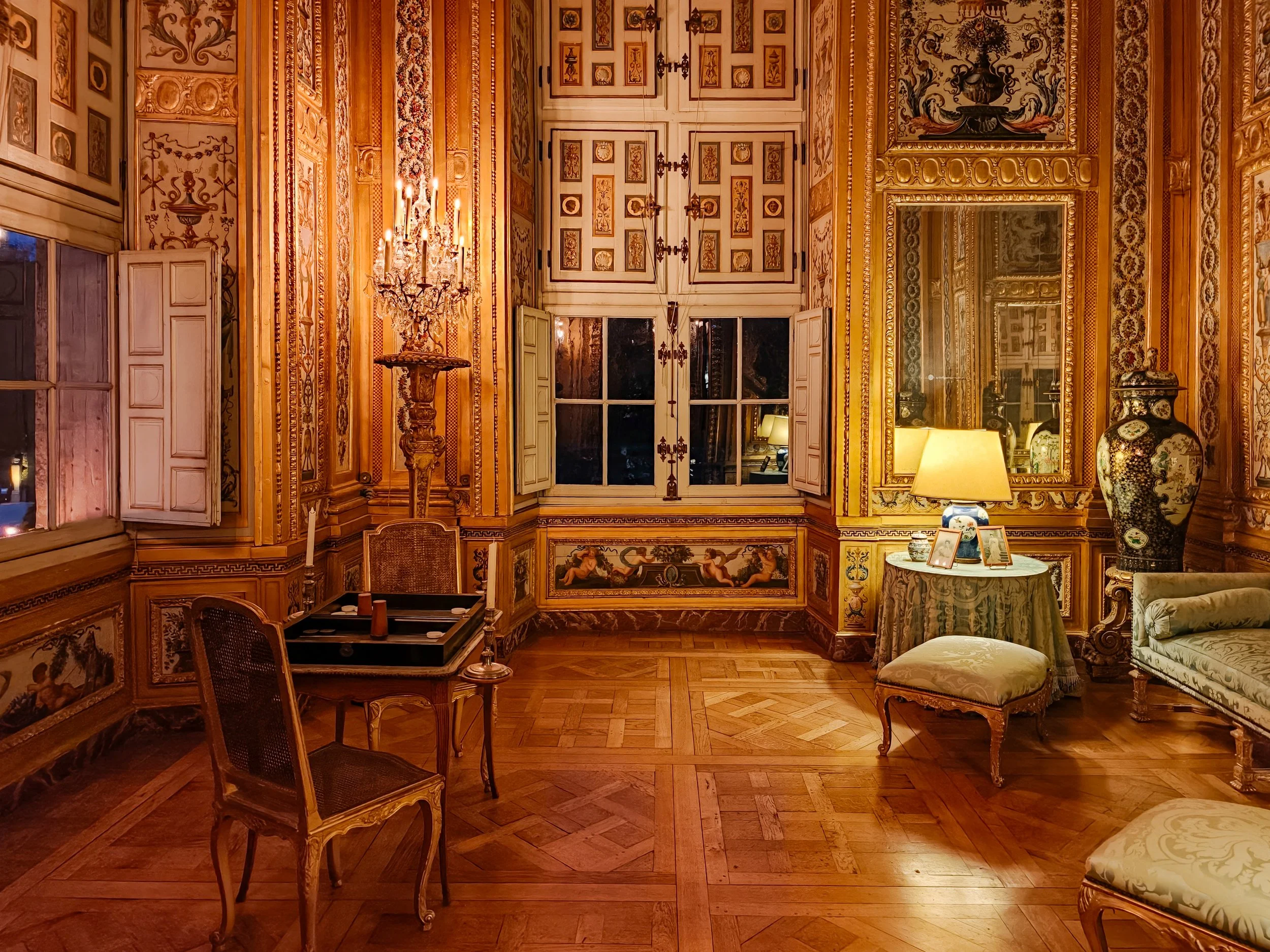
Present day view of a private room at the Vaux-le-Vicomte. Image: Dan Latif.
In the morning, before visitors arrived, the television had to be hidden away, the toys put back, and the room returned to its seventeenth-century appearance. In the evening, family life resumed its course. Fifty-eight years later, Alexandre could no longer imagine going back. “Our greatest pride is to share this place with as many people as possible and to bring its beauty and poetry to life.”
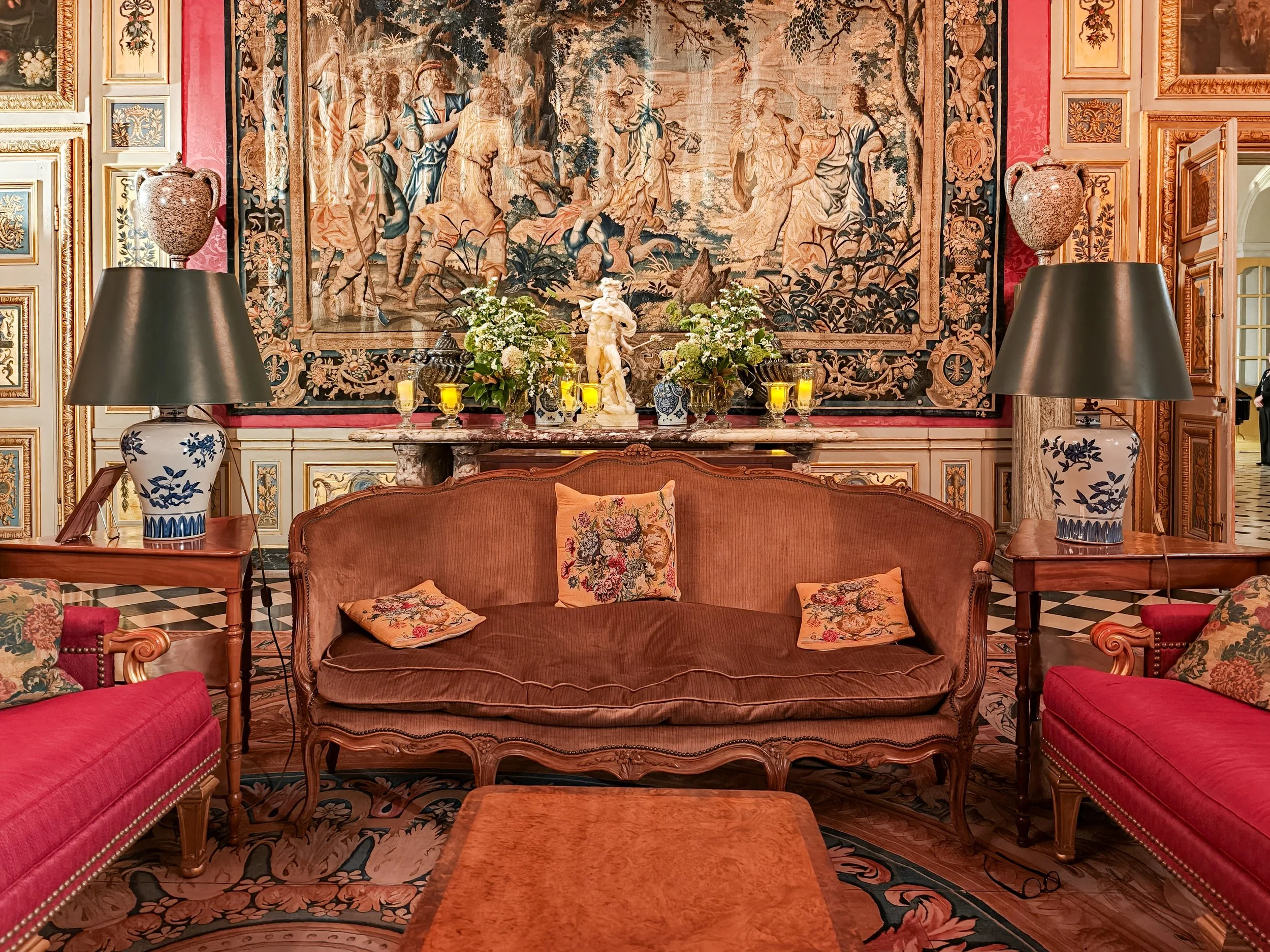
Present day view of a state room at the Vaux-le-Vicomte. Image: Dan Latif.
He is also keen to describe Vaux as a “home” rather than a palace. There is grandeur, of course, but also a more intimate sense of proportion that makes the place immediately approachable. Even the surrounding buildings, substantial enough elsewhere to form a château in their own right, contribute here to the balance of the whole.
The Grottoes and the Return of Water to Vaux-le-Vicomte
Eventually, we approach the Grottoes, carved alcoves inhabited by atlantes, gods and demigods. River deities and sandstone lions form a spectacular ensemble, behind which lies an equally remarkable feat of engineering: an underground reservoir supplies the fountains of the lower gardens by gravity. The Grottoes are undergoing a comprehensive renovation known as Retour aux Sources, thanks to the generosity of the Friends of Vaux-le-Vicomte (led by Vogüé) and other charitable organizations.
At the Grottoes, one can place themselves in the memory of the famous evening of August 17, 1661— the night of Fouquet’s grand opening of the château. As part of the celebration, Fouquet asked France’s most famous comedy writer Molière to prepared a series of acts for guests to enjoy. According to Vogüé, the playwright had only two weeks to write the piece. “He must have thought, ‘My God, Fouquet, how am I going to do this in two weeks?’” Nonetheless, Molière combined music and dance with a score by Jean-Baptiste Lully, and produced the first comédie-ballet: Les Fâcheux or The Troublemakers. Ultimately transcendent, the work had its debut performance here at Vaux-le-Vicomte, near the Grottoes before which we stood.
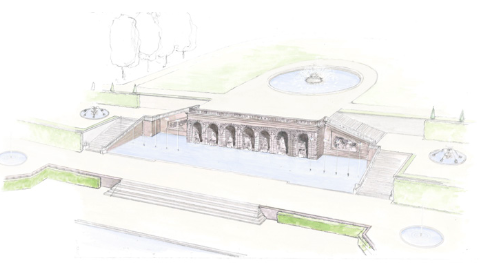
A phase of the Retour aux Sources project. Image: via Vaux-le-Vicomte.
Alexandre de Vogüé pauses at the statues representing the rivers. To the right, the Tiber stands for Rome. Opposite it, the Anqueuil, the local river, appears vigorous where the Tiber seems more melancholy. Fouquet, he points out with some amusement, was clearly not lacking in self-confidence.
At the end of the perspective, a statue of Hercules draws together the long lines of the garden. Everything here is a matter of optics and proportion. Le Nôtre plays with the eye, bringing distant elements closer and disguising their true distance. The master of the house then compares Vaux with the château of the Sun King: “At Versailles, you get a little lost in the groves. Here, it’s very simple.” A simplicity he considers one of the estate’s great strengths.
The Mysteries Still Hidden Inside Vaux-le-Vicomte
“Watch where you step, this floor dates from the seventeenth century,” Alexandre warns as we enter the estate.
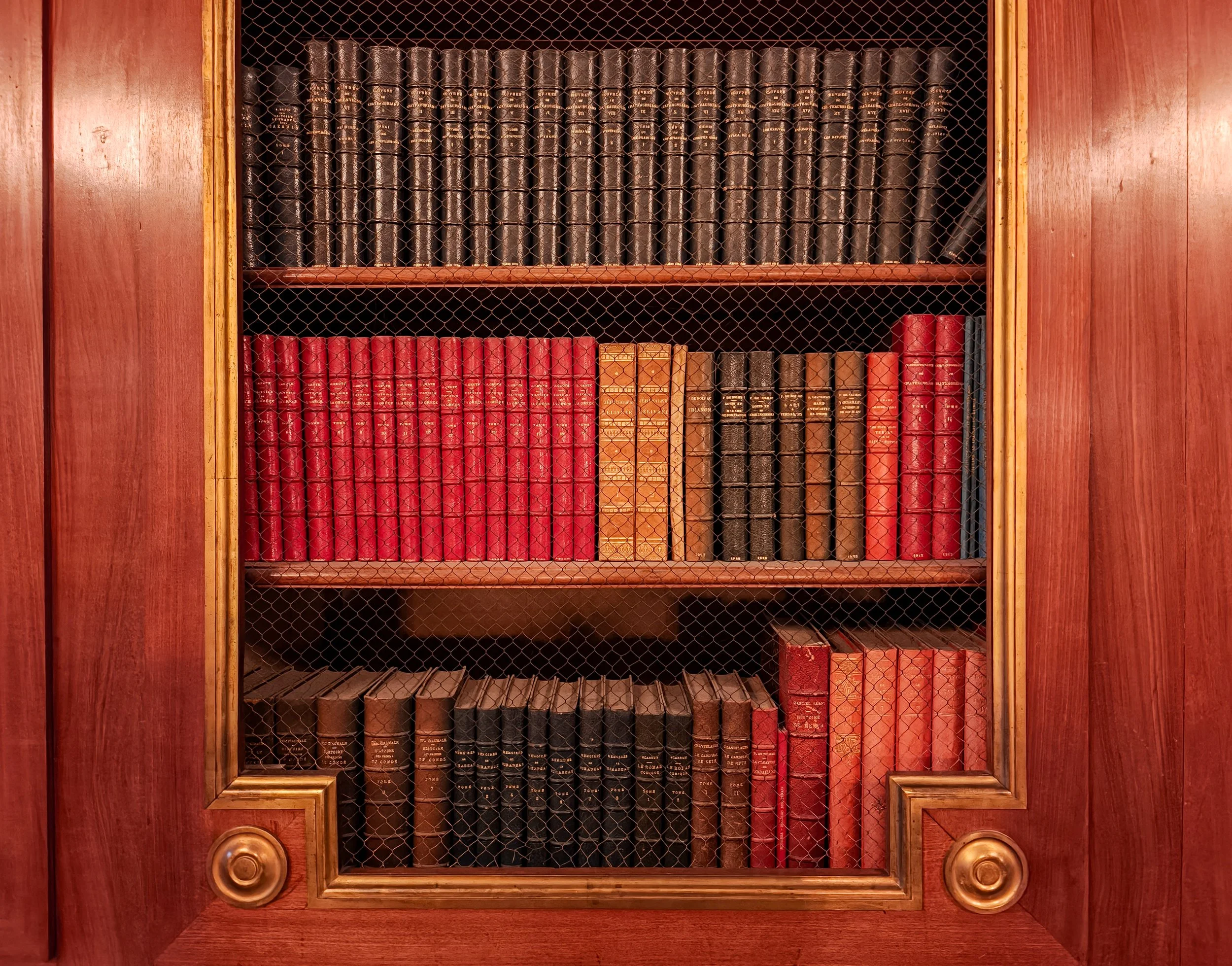
Books in a present-day library at the Vaux-le-Vicomte. Image: Dan Latif.
The parquet floors in the salons are original. The visit takes us through the King’s Bedroom and then his antechamber, now transformed into a library. Behind the grilled doors are the works of the Sommier collection: rare books dating back to the sixteenth century, volumes from the centuries that followed, an impressive collection from the Bibliothèque de la Pléiade, as well as etchings and original drawings by masters.
In the Buffet Room, a bust of Charles Le Brun recalls once again the presence of the man who designed much of the interior decoration.
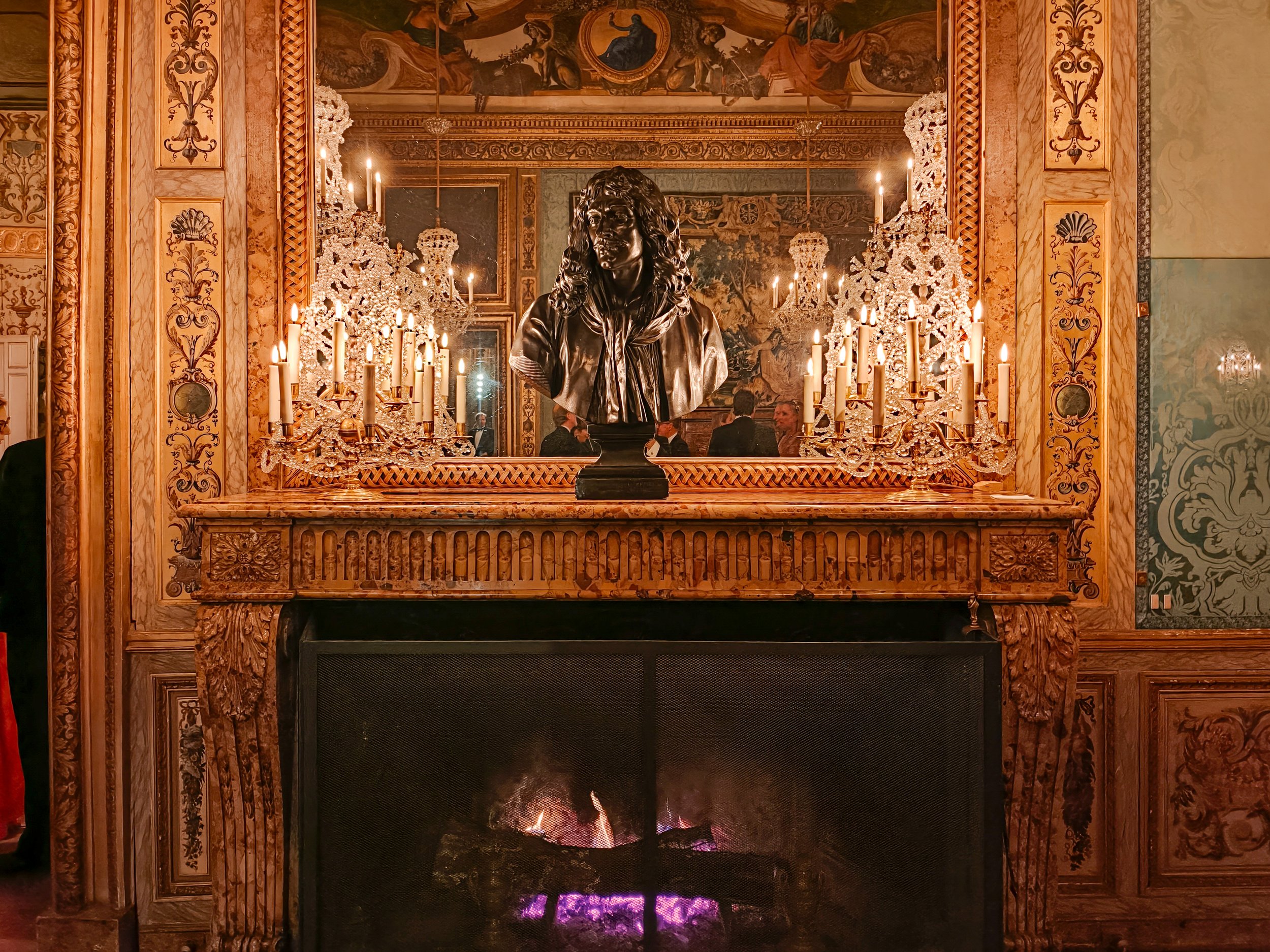
Bust in a buffet room at the Vaux-le-Vicomte. Image: Dan Latif.
Between explanations, the conversation turns to the parts of the château that still retain an element of mystery. Alexandre admits that some areas remain unknown even to him, including an underground tunnel he has never explored. The monumental nature of the place ensures some degree of legend and unsolved curiosity.
The ideas still intrigues him today. When asked whether a treasure might still be hidden there, he smiles: “Perhaps. Fouquet was wealthy, and he knew he had enemies. So perhaps there is something.” The conversation ends in laughter over the prospect of one day exploring these passages. Alexandre says he would happily share any discovery, provided, he jokes, that someone else takes care of the digging.
Vaux-le-Vicomte is located at Château de Vaux-le-Vicomte 77950 Maincy, France. Learn more about Vaux-le-Vicomte here. Learn more about the Retour aux Sources project here.
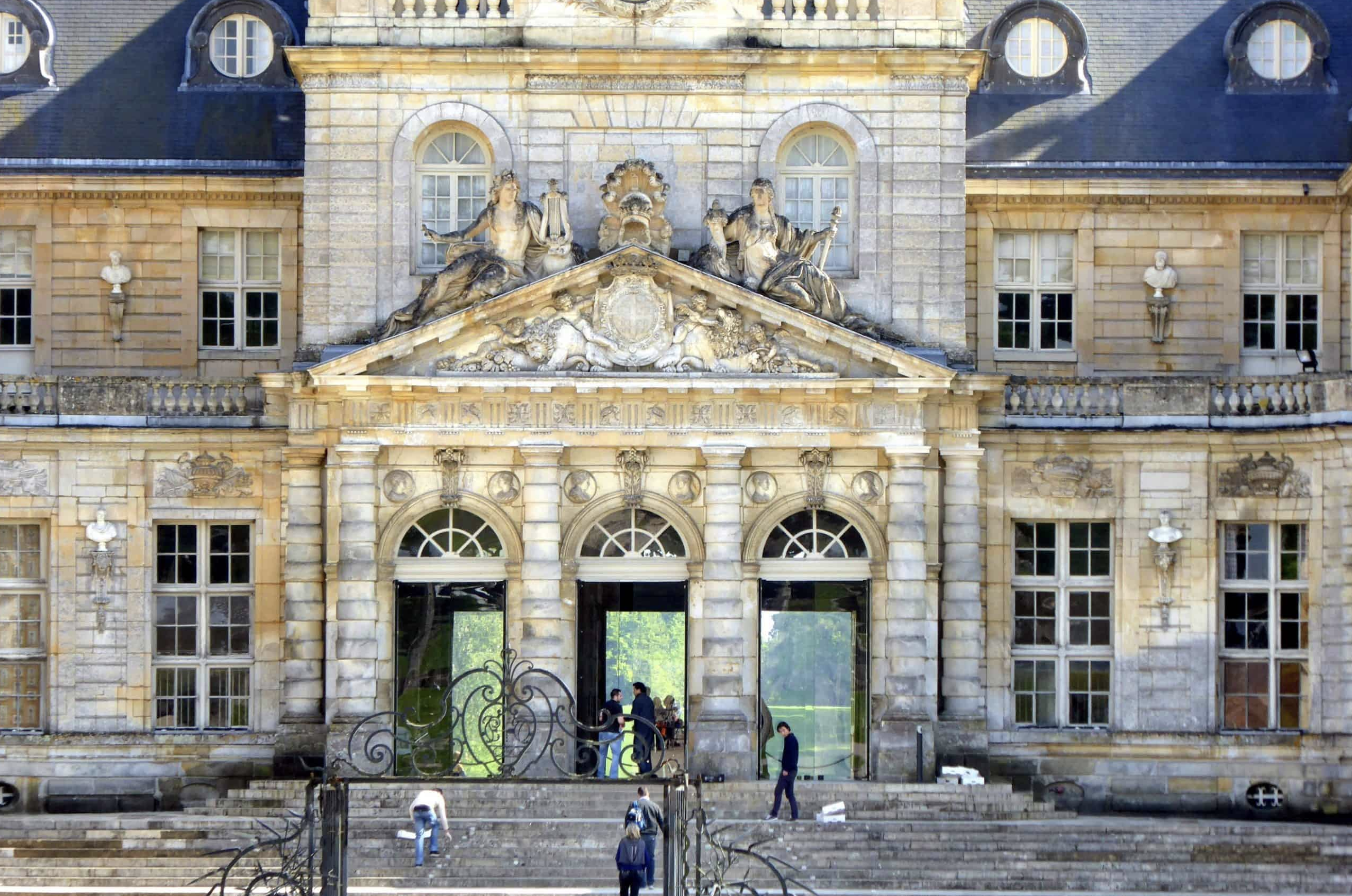
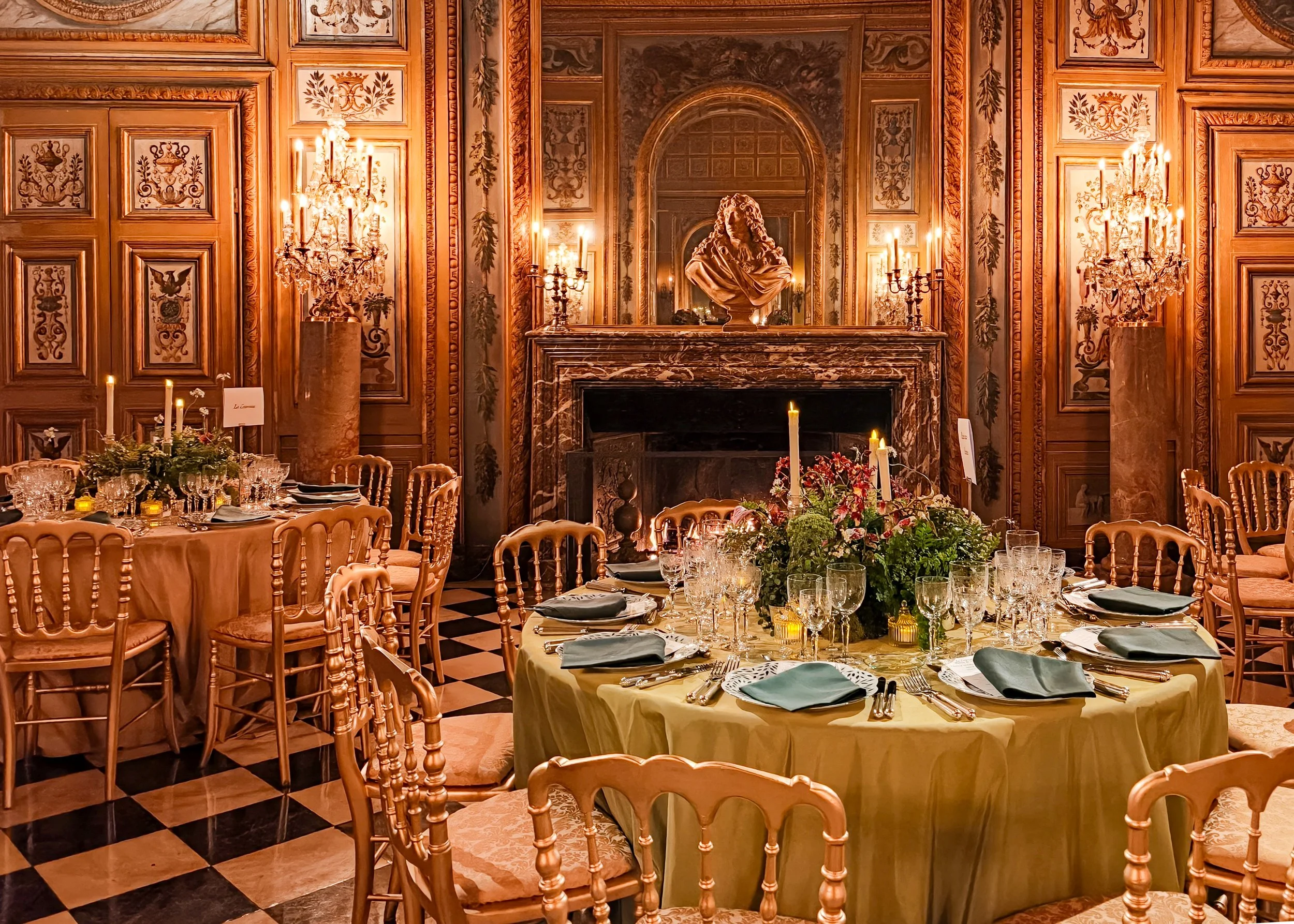
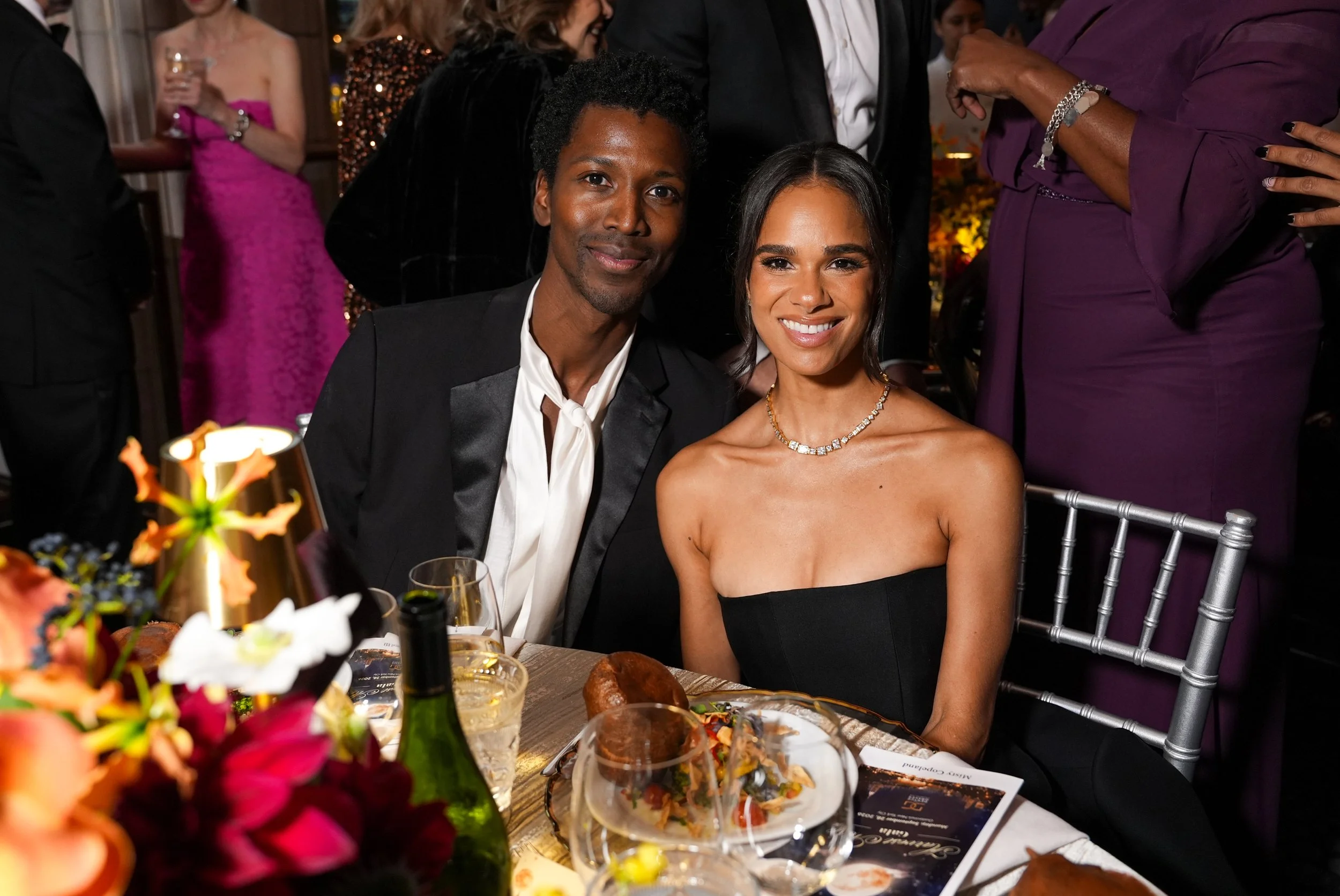

Featuring exclusive photos, Vaux-le-Vicomte closed its gates to the public for a gala supporting the restoration of the château’s Grottoes and historic fountains. Chaired by Barbara Tober, the evening brought together patrons, music, candlelight and fireworks in support of the estate’s “Retour aux Sources” project. Come inside with us.