
Where the Automobile Began: Inside the Mercedes-Benz Museum in Stuttgart (with Photos!)
Some people go to museums looking for the origins of the world. In Stuttgart, people will find the origins of the car. Celebrating the 140th anniversary of the automobile and the 100th anniversary of the Mercedes-Benz brand as we know it, writer Dan Latif and photographer Julien Fautrat explore nearly 200,000 square feet of automotive history at Mercedes-Benz Museum.
Getting In: Architecture and Layout of the Mercedes-Benz Museum
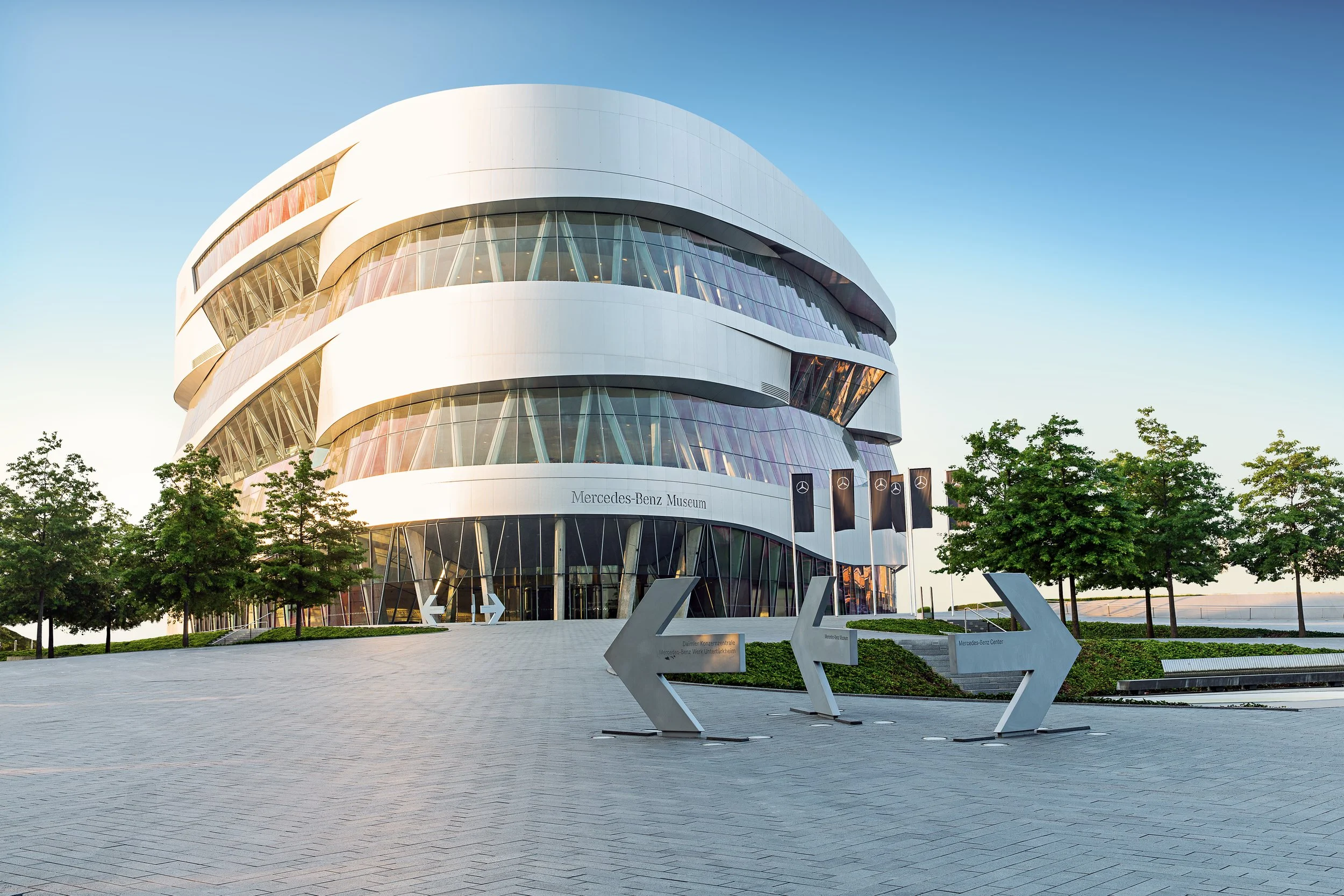
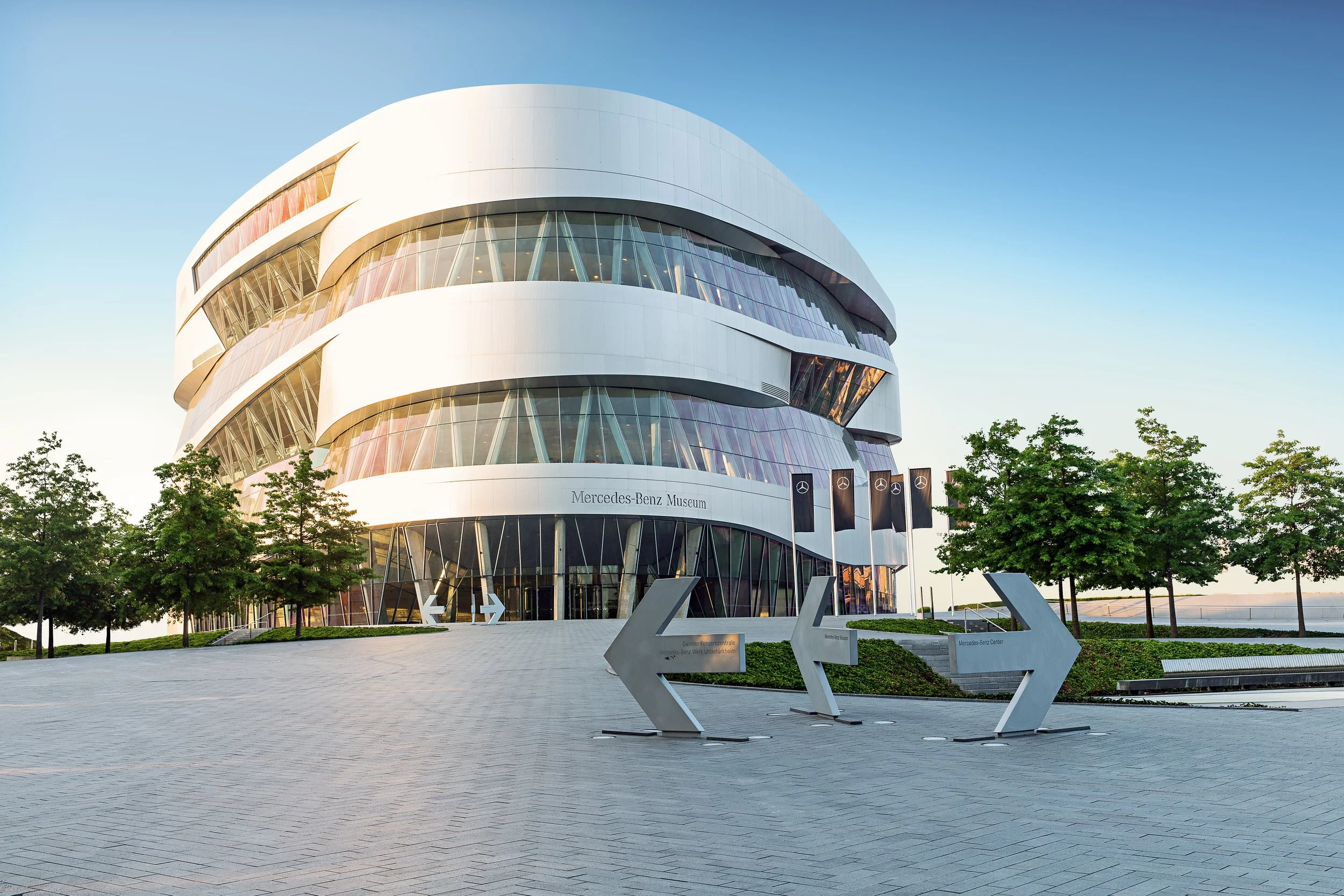
Mercedes-Benz Museum, Stuttgart. Exterior photograph from 2015. Image: Provided. Mercedes-Benz Classic Archives Reference: D854691.
The Mercedes-Benz Museum, located near the historic Mercedes-Benz factory and center of Stuttgart, is practically unavoidable if approaching the city from the B14. Swirling and twirling along the road, it is striking first for its scale, but also for its architecture, conceived and executed by three different teams. The original concept— a stack of overlapping glass and aluminum— came from UNStudio of Amsterdam. It was then refined by legendary museum architect HG Merz of Stuttgart and Berlin before an in-house contractor executed construction, completing the project in 2006.
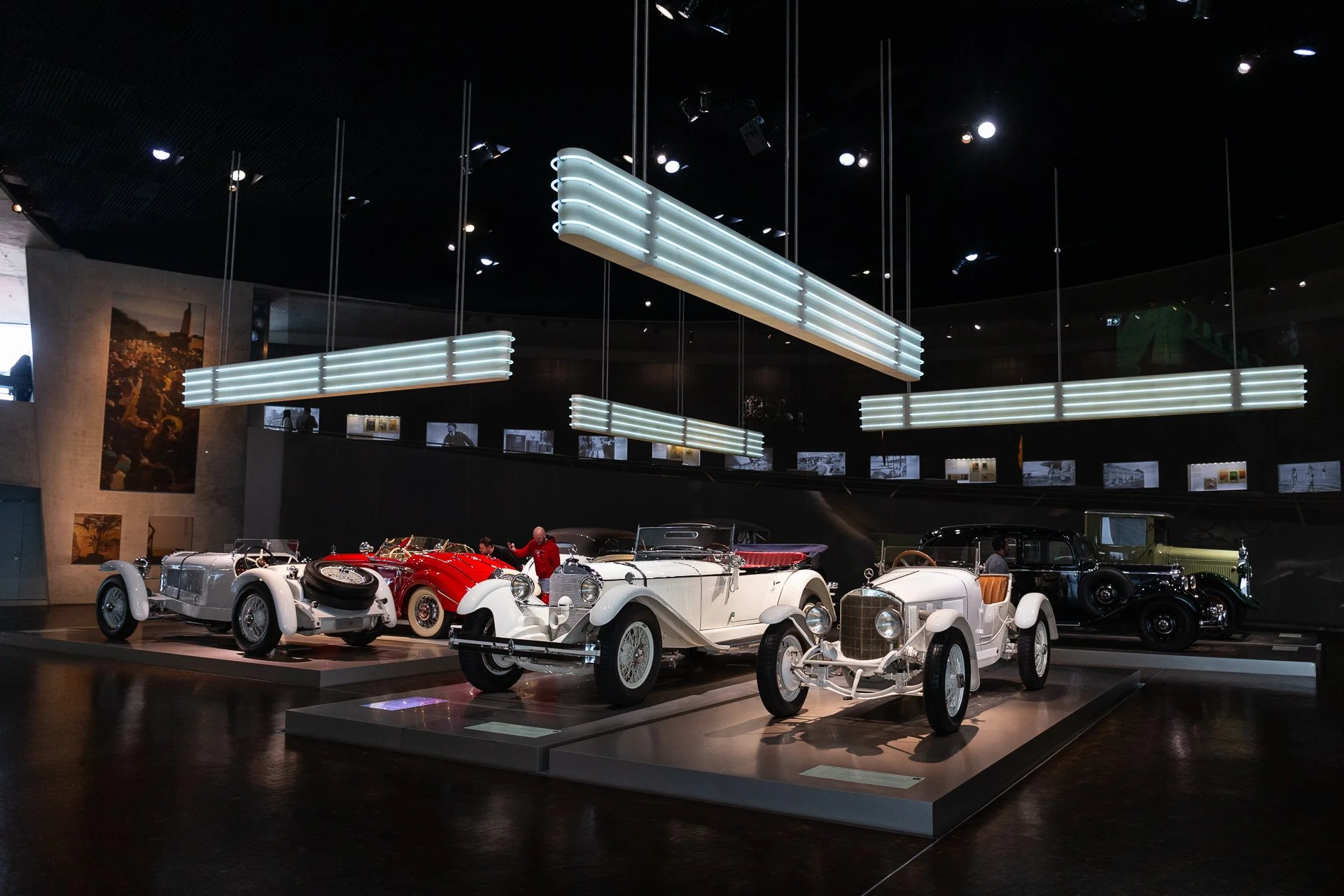
Archives of Mercedes-Benz vehicles at the Mercedes-Benz Museum. Image: Julien Fautrat.
Inside, the shifting, bulbous building brings together more than 160 vehicles and over 1,500 objects, spread across nine levels and nearly 200,000 square feet or 16,500 square meters of towering, column-free space. What really makes it enjoyable is that it never feels like a warehouse full of prestigious cars. Everything is designed like a stroll. You go up, gain height — thinking you may be lost or already have passed this way, but not at all. You then make your way gently back down through eras, uses, styles and dreams, all the way to the most ordinary accessories the automobile has produced.
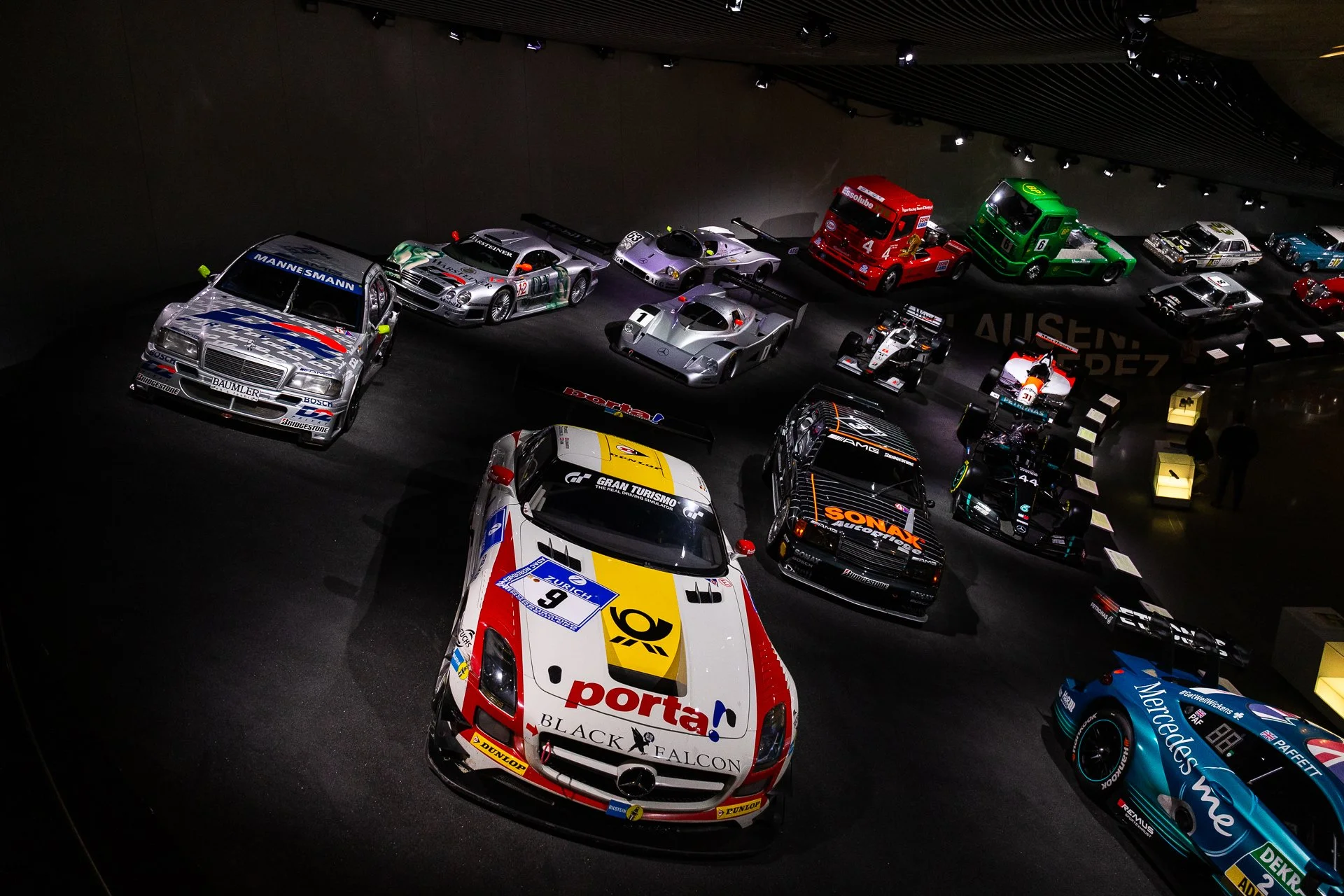
Performance vehicles at the Mercedez-Benz Museum. Image: Julien Fautrat.
The route through the museum is built around two threads that constantly intersect. On one side, the Legend Rooms, which tell the story of the brand in chronological order. On the other, the Collection Rooms, which show how Mercedes-Benz has occupied all kinds of territory, from travel to utility vehicles, from emergency vehicles to motorsport. That blend is what gives the place its charm. You can walk through it like an enthusiast, heading straight for the iconic models, or simply as a curious visitor, carried along by the idea that the car also tells the story of a way of life.
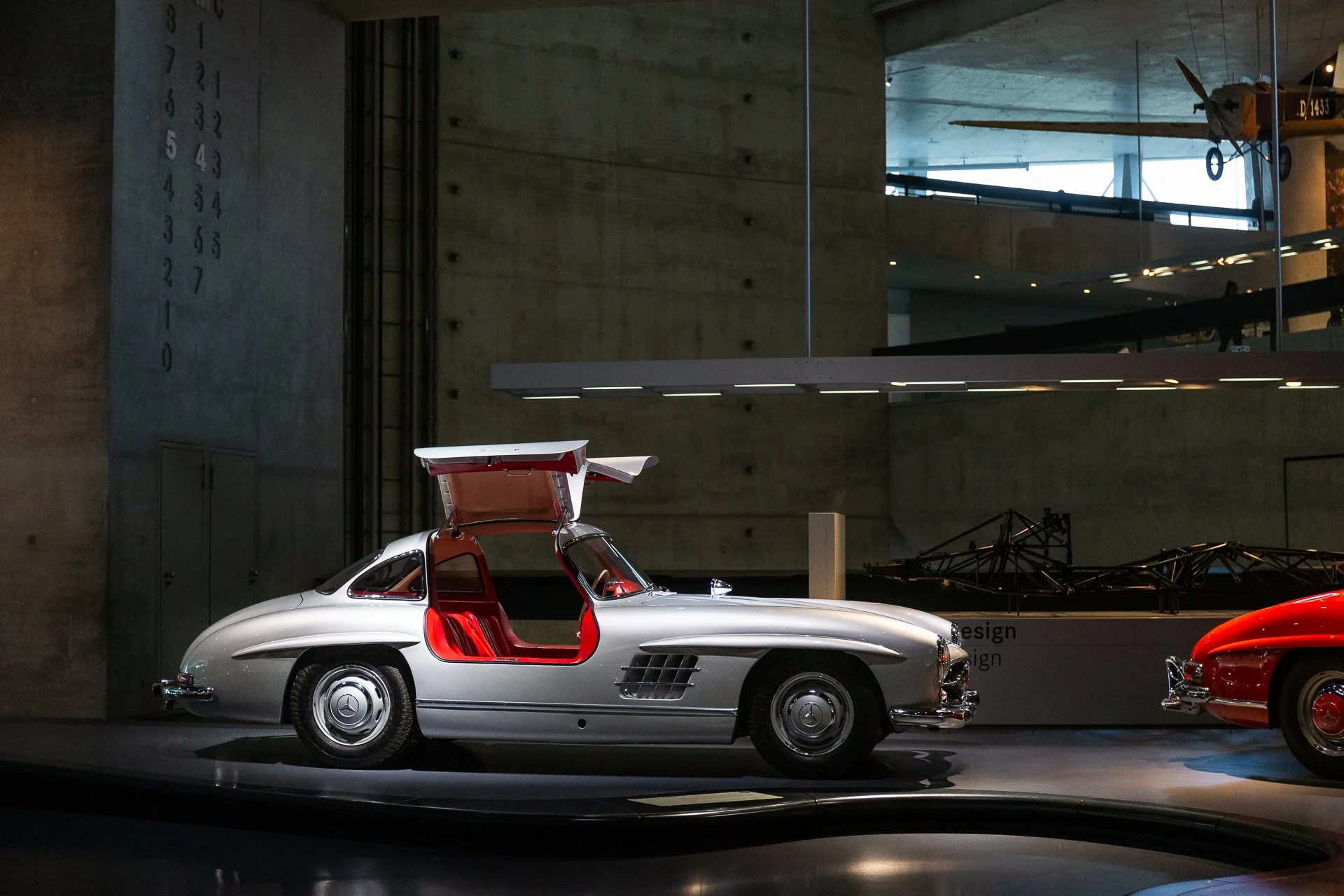
The Mercedes-Benz 300 SL at the Mercedez-Benz Museum. Image: Julien Fautrat.
From the First Automobile to Concept Cars at The Mercedes-Benz Museum in Stuttgart
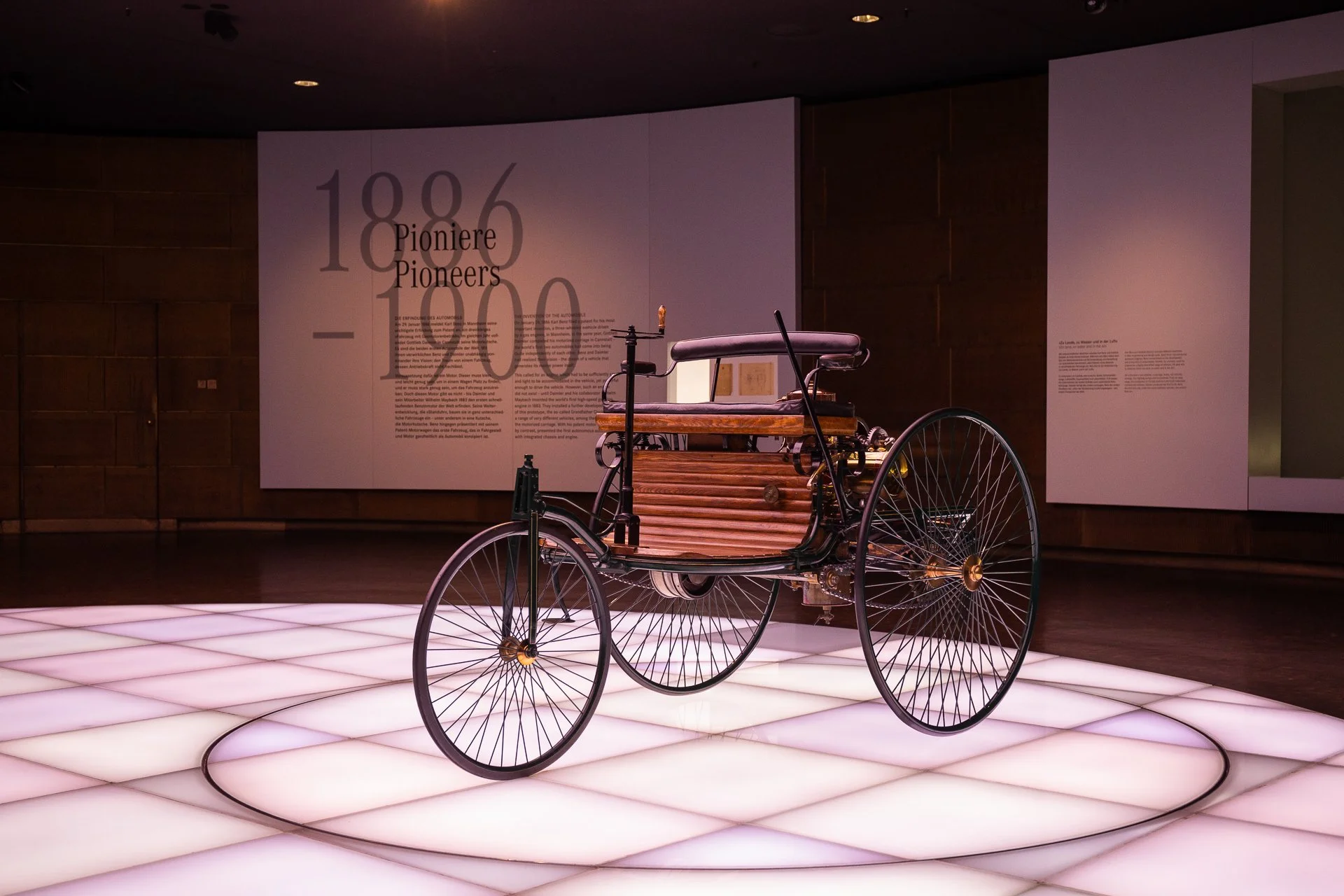
The Benz Patent-Motorwagen at the Mercedes-Benz Museum. Image: Julien Fautrat.
Everything begins, of course, with the very early days of the automobile, and with that rather rare feeling of finally seeing in real life what you have often only known from books. The Benz Patent-Motorwagen, dating from 1886, sets the tone. “Ah, a horseless carriage,” you think at once. There is something both very simple and very powerful about it. You suddenly understand that the car did not begin as a symbol of power or status, but as an invention that was still tentative, almost fragile, and yet would go on to change the world. From there, the visit unfolds like a family tree. You pass the ancestors, the cousins, the side branches, and find yourself thinking that here, when people talk about family, everyone really is present: the parents, the grandparents, the great-grandparents, and all the more or less unruly descendants.
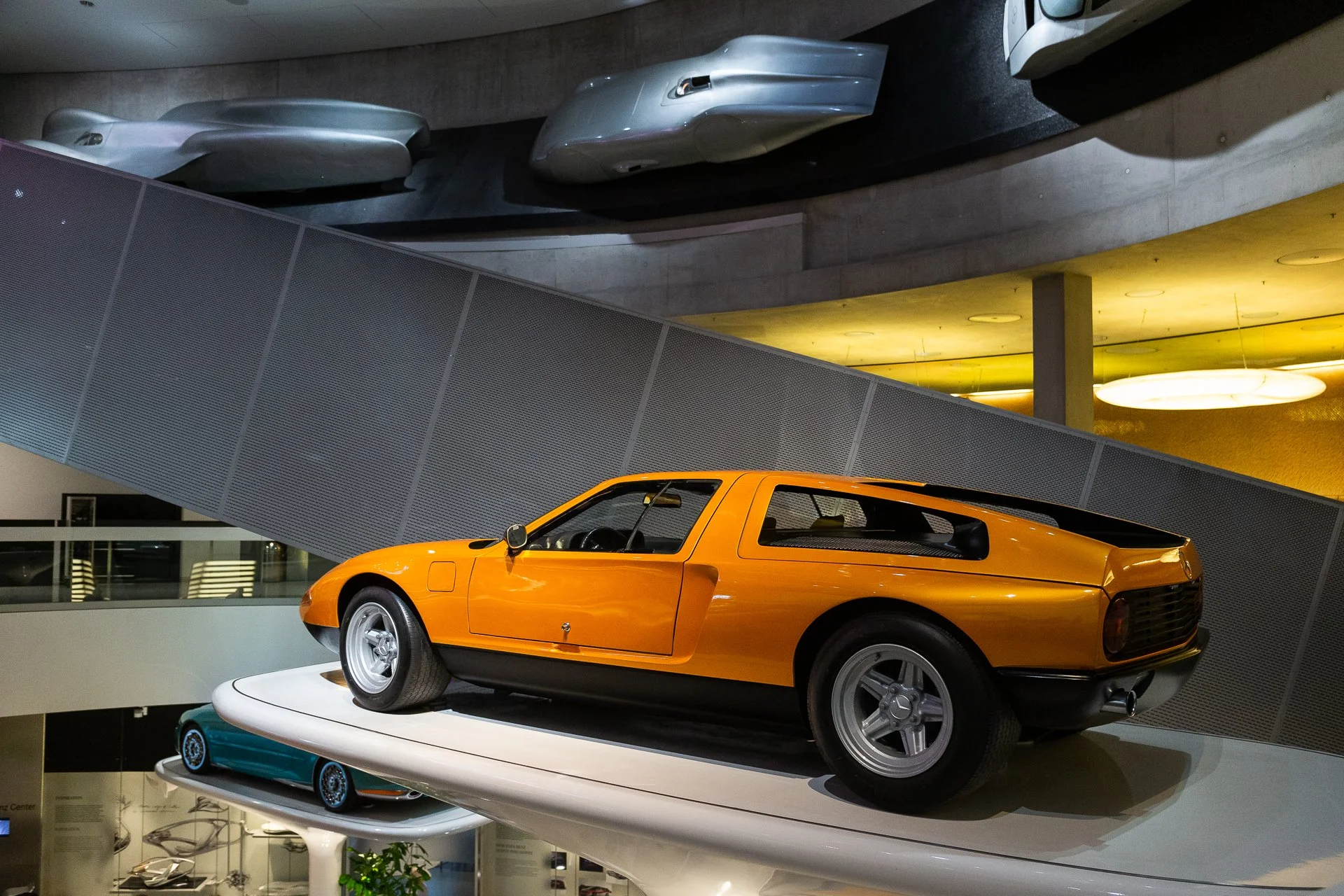
Mercedes-Benz C 111-II at the Mercedes-Benz Museum. Image: Julien Fautrat.
What strikes you next is the freedom with which the museum lets different eras speak to one another. Among the highlights is the Mercedes-Benz C 111-II, which still looks today like an orange rocket from an old imagined future. There is also the Mercedes-Benz F 100, an impossible-to-miss purple MPV, our photographer Julien Fautrat’s favourite colour, complete with solar panels on the roof and a central driving position. Around it sits the Mercedes-Benz F 200 Imagination, a concept car that is said to have belonged to a Qatari prince who reportedly drove it in Monaco.
Beside it, the Mercedes-Benz F 400 Carving, Julien Fautrat’s favourite grey concept car, the one he says he would take to Crete with the love of his life. And finally, the Mercedes-Benz F 700, all of them reminders of how much the brand enjoys imagining the car before it really exists on the road.
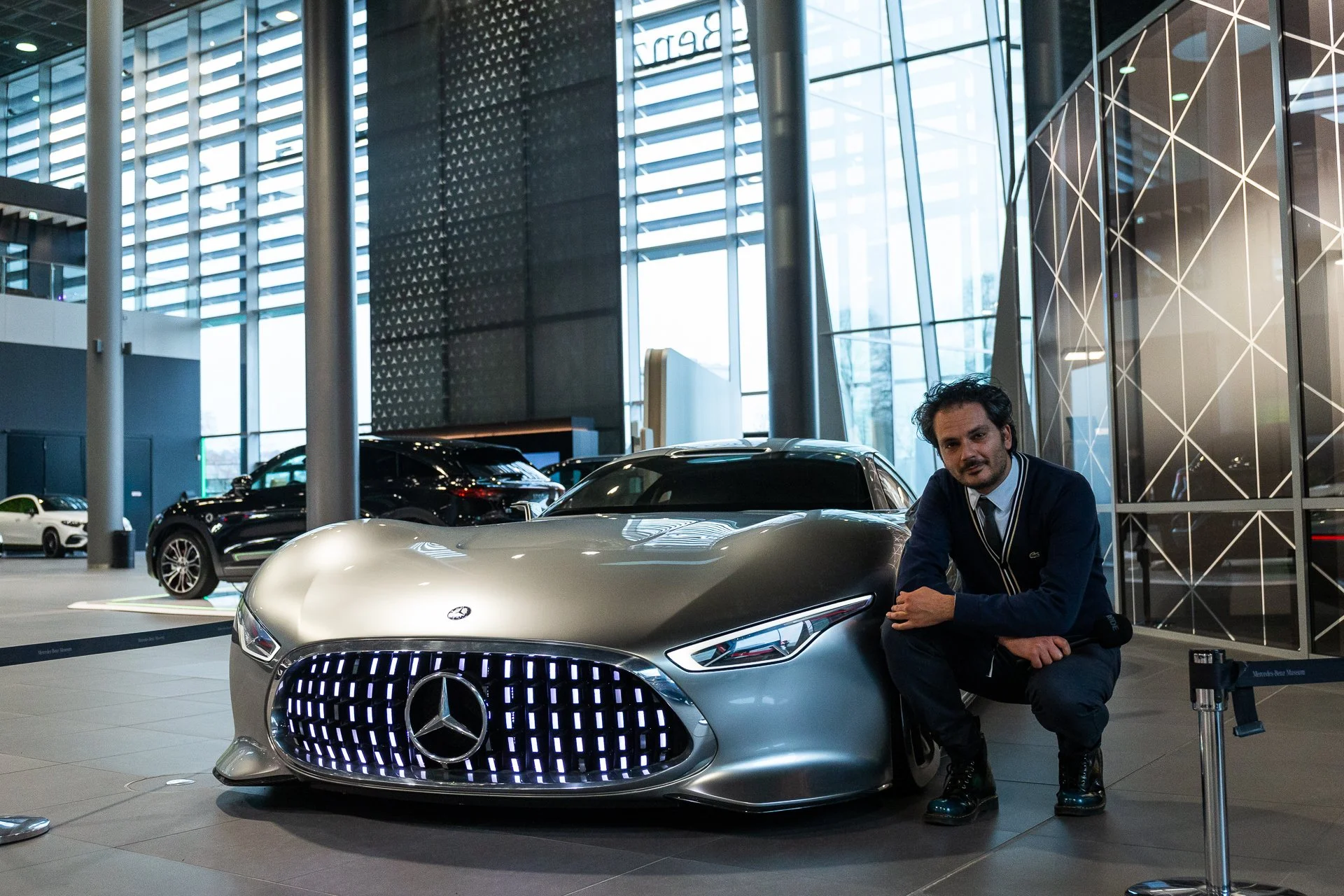
Mercedes-Benz AMG Vision Gran Turismo at writer Dan Latif at the Mercedes-Benz Museum. Image: Julien Fautrat.
Even the Mercedes-Benz AMG Vision Gran Turismo enters this walk like a star in its own right, having become the car of Bruce Wayne, played by Ben Affleck, in Justice League (2017). Next to it, the 2013 Mercedes-Benz SLS AMG Electric Drive recalls that the idea of electric motoring already existed back then, even before charging stations were part of everyday life. Proof that the desire for electric performance is nothing new.
Iconic Models, Everyday Cars, and Motorsport at The Mercedes-Benz Museum in Stuttgart
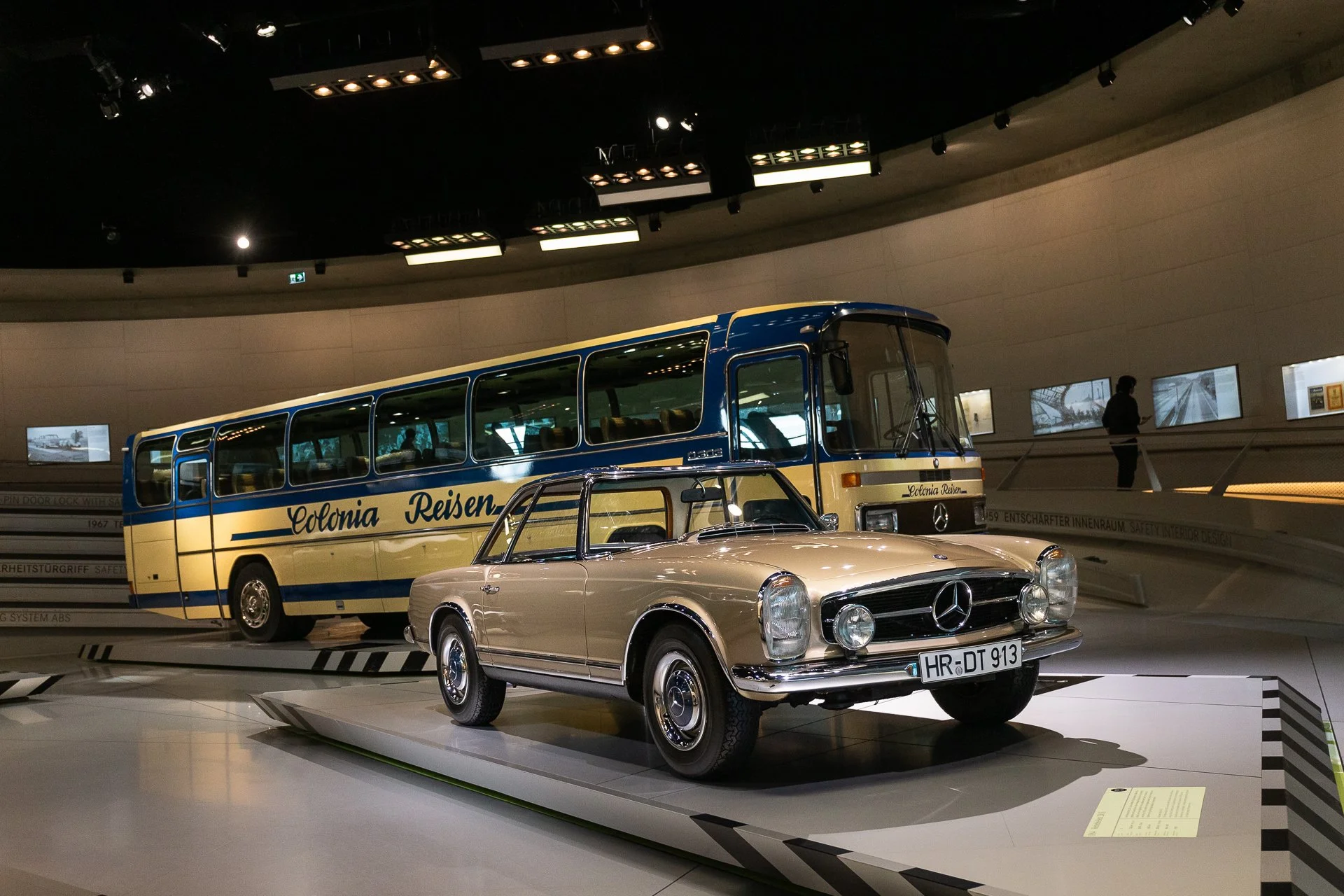
Mercedes-Benz 280 SL Pagoda at the Mercedes-Benz Museum. Image: Julien Fautrat.
The museum also knows how to speak to people who love cars without necessarily knowing every technical specification by heart. Some silhouettes are enough. A Mercedes-Benz 300 SL, a Mercedes-Benz 300 SLR, a Rennsportswagen, also known as the “Blaues Wunder” or the Renntransporter in the Hot Wheels world, a red Mercedes-Benz 500 K grand cabriolet, or a Mercedes-Benz 280 SL Pagoda, and a whole world of associations comes rushing back.
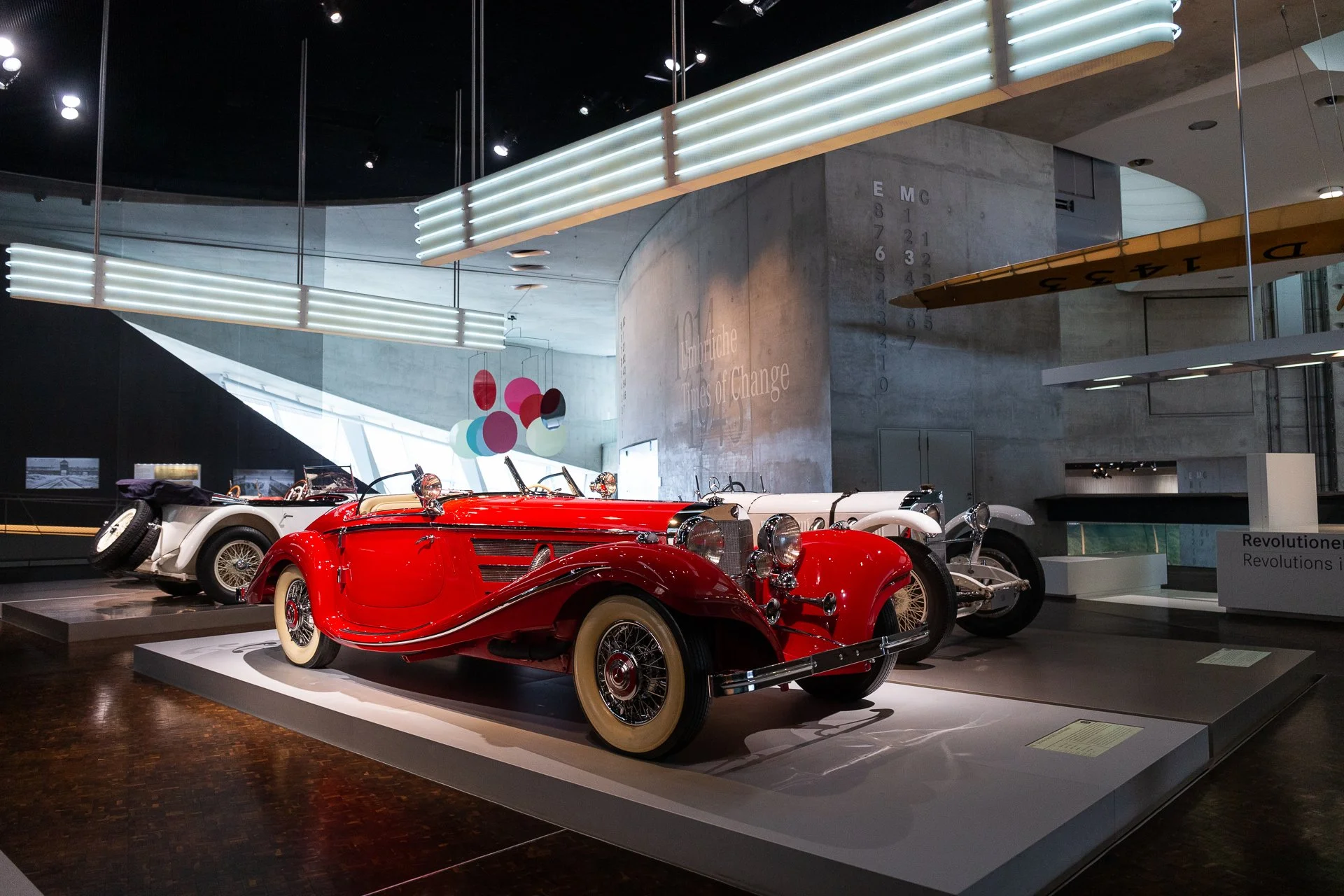
Mercedes-Benz 500 K at the Mercedes-Benz Museum. Image: Julien Fautrat.
These are cars you have seen in films, on posters, in books, sometimes even in family memories. They have that immediate power to show that an automobile can be at once an object, an era and a style.
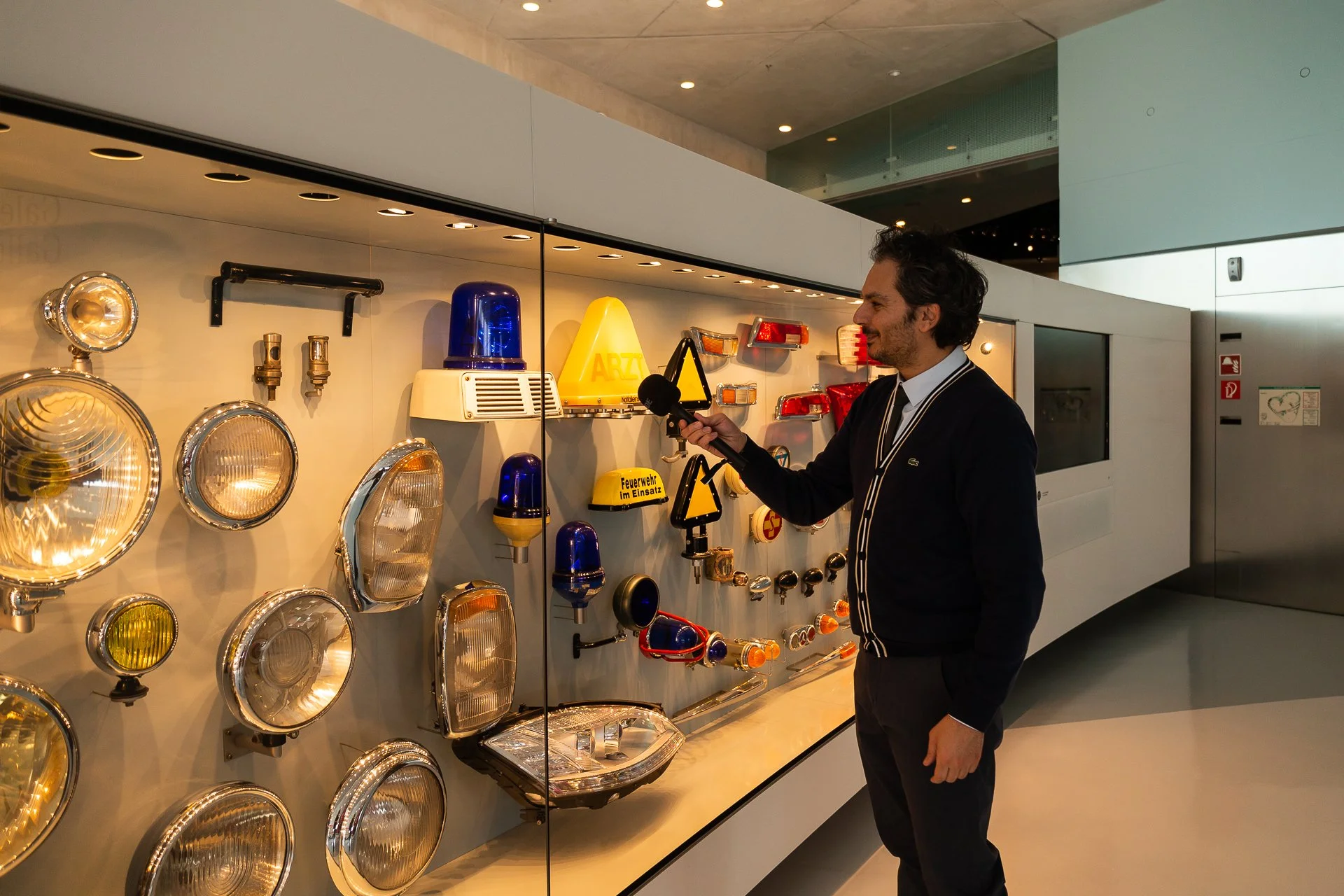
Writer Dan Latif encountering ephemera at the Mercedes-Benz Museum. Image: Julien Fautrat.
The walk also offers some lovely pauses on the more everyday side of automotive life. Right at the top, after the lifts, Collection Room 1, the Gallery of Voyagers, opens a softer, almost domestic interlude in this larger story of performance.
Here you find the ideas of departure, weekends away, holidays, journeys shared with family or friends. The Marco Polo, the camper van, and the 1984 Mercedes-Benz 300 T estate tell another history of the automobile, perhaps less heroic, but just as important. One made of ordinary roads, road trips, stops along the way, luggage, miles quietly covered, and the very real freedom a car can offer when it truly accompanies a life.
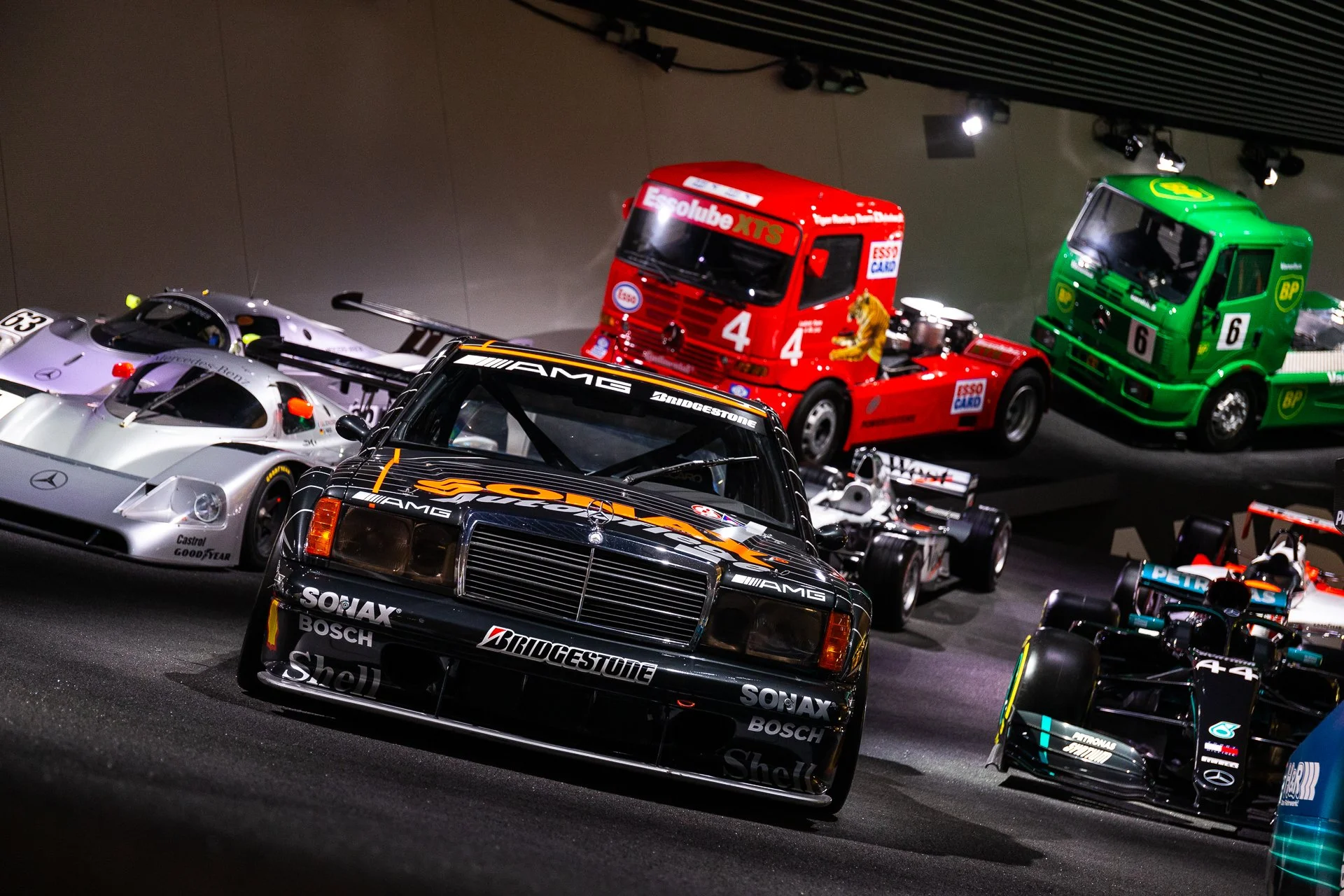
Performance vehicles at the Mercedez-Benz Museum. Image: Julien Fautrat.
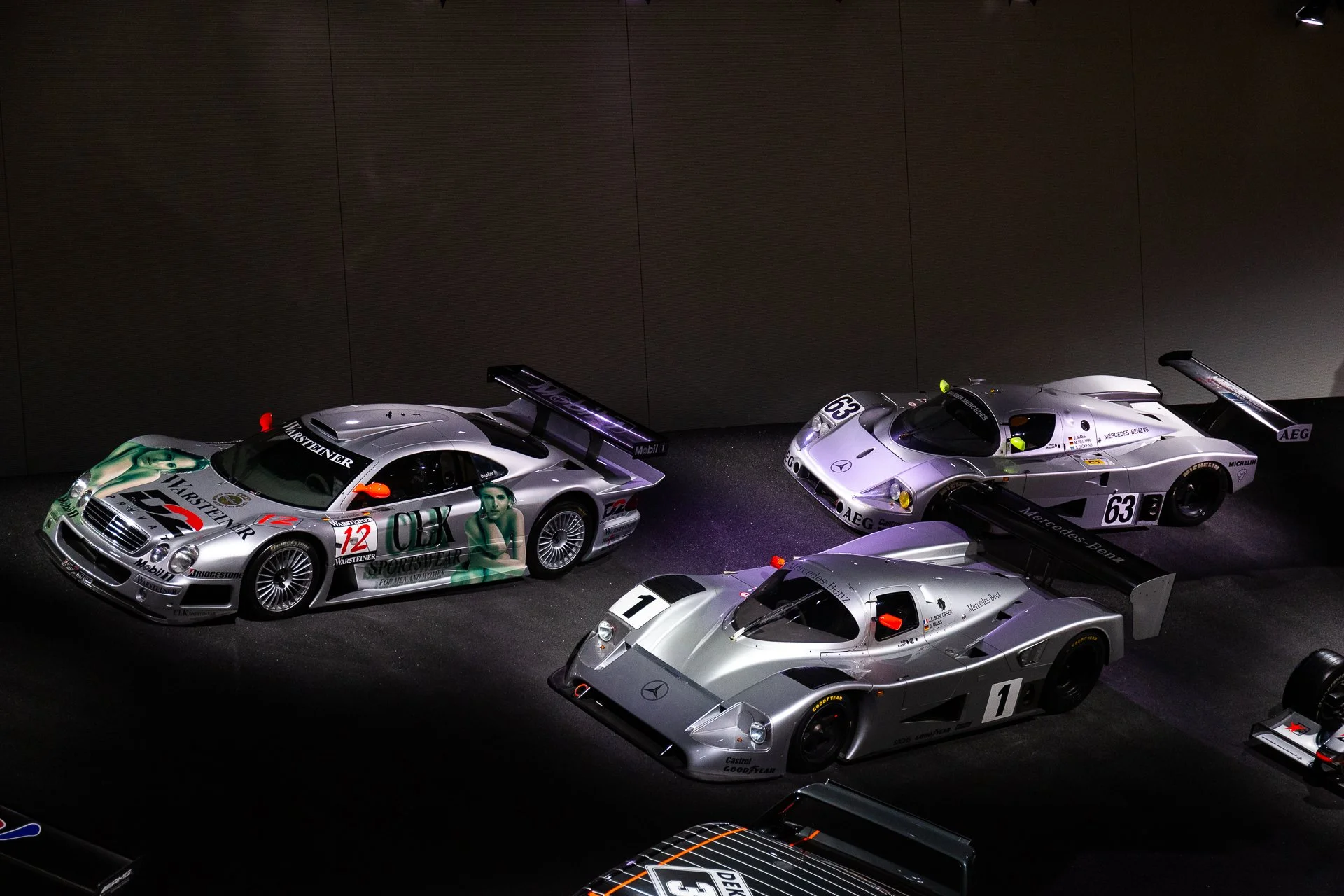
Gran Prix performance vehicles at the Mercedez-Benz Museum. Image: Julien Fautrat.
And then there is the most spectacular side of all, the one that makes the heart beat a little faster. In the areas devoted to competition, Mercedes-Benz lays out an entire mythology. You come across the great Grand Prix machines, the Mercedes-Benz W 125, W 154 and W 196, but also the Mercedes-Benz CLK GTR, the Sauber C9 and Sauber C11, and the Mercedes-Benz SLS AMG GT3, winner of the 24 Hours of Nürburgring.
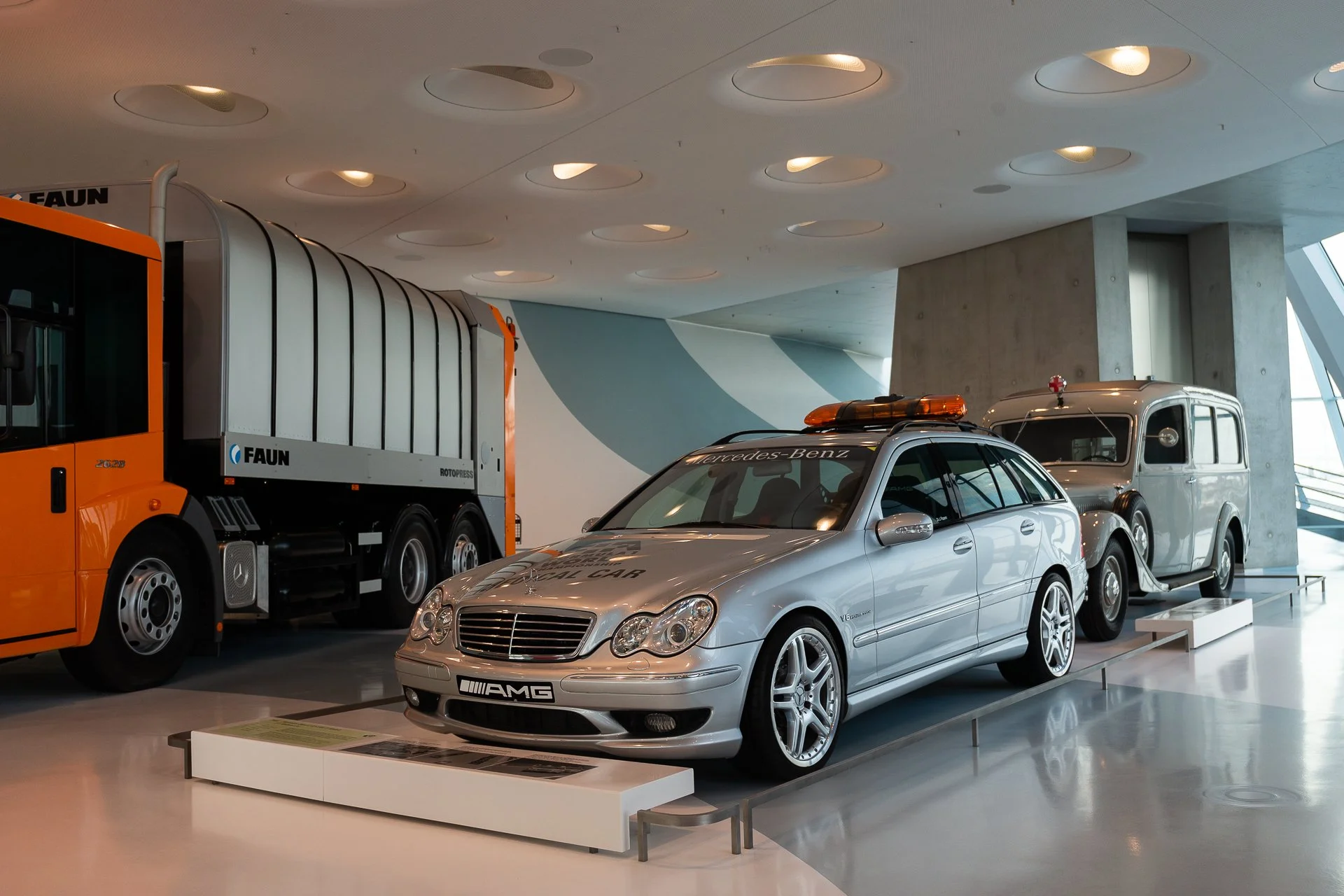
Mercedes-Benz C 32 AMG Estate F1 Medical Car at the Mercedes-Benz Museum. Image: Julien Fautrat.
Even the Mercedes-Benz C 32 AMG Estate F1 Medical Car has its place in this story, proof that motorsport is not only about podiums, but about a whole world of speed, precision and organization. Alongside these are more unexpected detours: police cars, the iconic green “Polizei” vehicles, a Deutsches Rotes Kreuz (German Red Cross) truck, and other machines that show that the history of the automobile is not written on the racetrack alone.
Exhibitions, Events, and Visiting The Mercedes-Benz Museum in Stuttgart Today
While the history is rich, this museum evolves, welcoming new ideas. For example, the temporary exhibition Youngtimer spotlights ten everyday cars from the 1990s and 2000s, the kind that instantly bring back childhood memories, first journeys or youthful dreams, open now through May 31st, 2026.
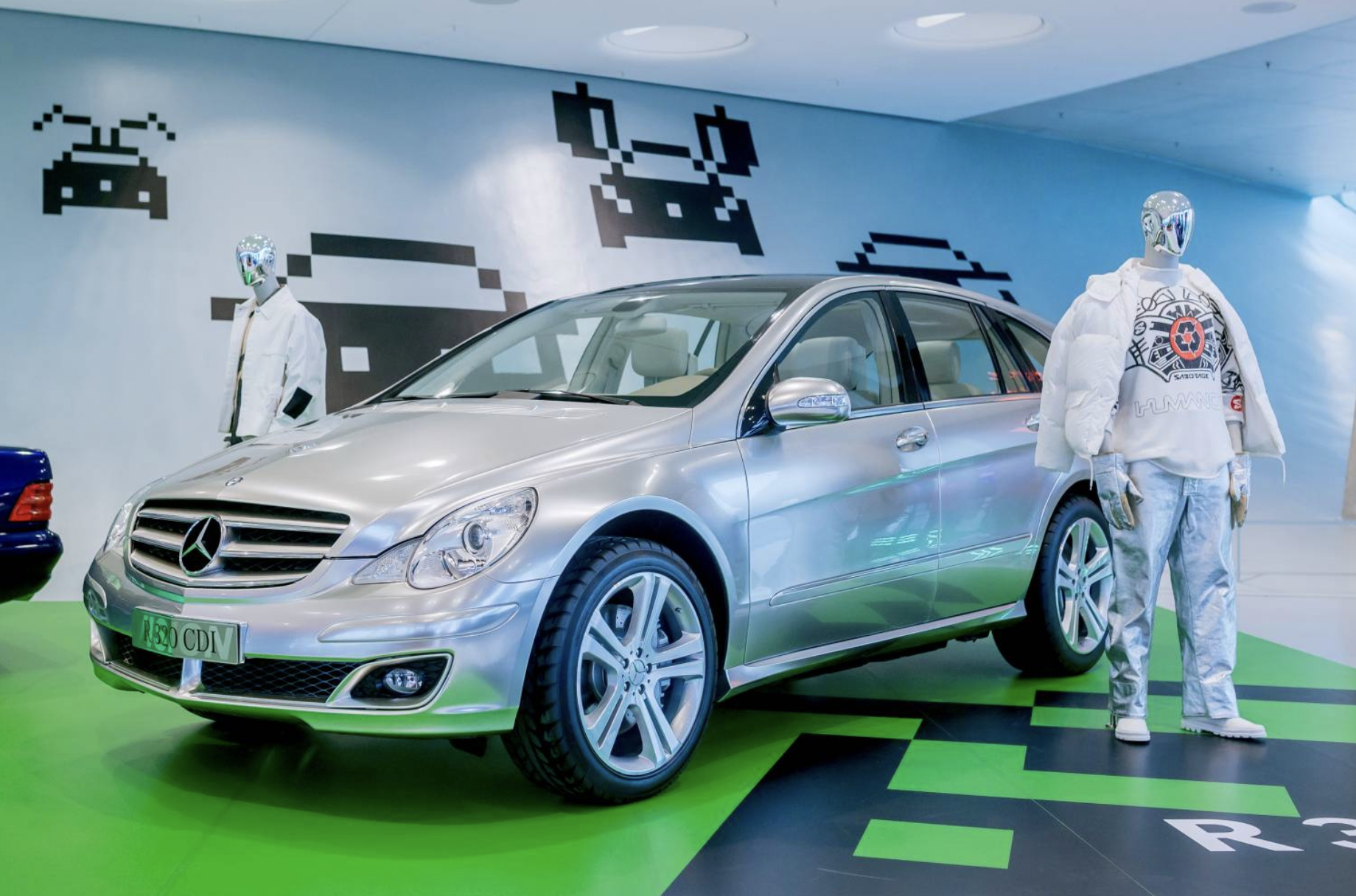
Mercedes-Benz VISION R 320 CDI, concept vehicle for model series 251. Motor show vehicle at the Geneva Motor Show in March 2005. Photo from the special “Youngtimer” exhibition at the Mercedes-Benz Museum. Mercedes-Benz Classic Archives Reference: D862611. Image: Provided.
In this section, one especially notices a 2005 Mercedes-Benz R-Class, an unusual car, almost ahead of its time in the way it blended categories. And to extend this idea of a living museum, the museum also hosts Classics & Coffee, a Sunday gathering running seasonally from April 12th to October 11th, 2026, conceived as a simple and welcoming moment around classic cars and young timers. People come to look at the cars, of course, but also to wander, talk and have a coffee, without needing to be an expert to feel at home. Similarly, the Mercedes-Benz Brand Center in Dubai has become a verifiable scene, with its showroom coffee shop becoming a destination in itself.
While in Stuttgart: Why the Mercedes-Benz Museum Is Worth Visiting
In the end, that may be the real success of the Mercedes-Benz Museum: a place that speaks to enthusiasts. But it also speaks very well to everyone else. To those who love beautifully designed objects, industrial history, travel memories, films, symbols of success, or simply places where you understand how an invention eventually transforms everyday life for everyone.
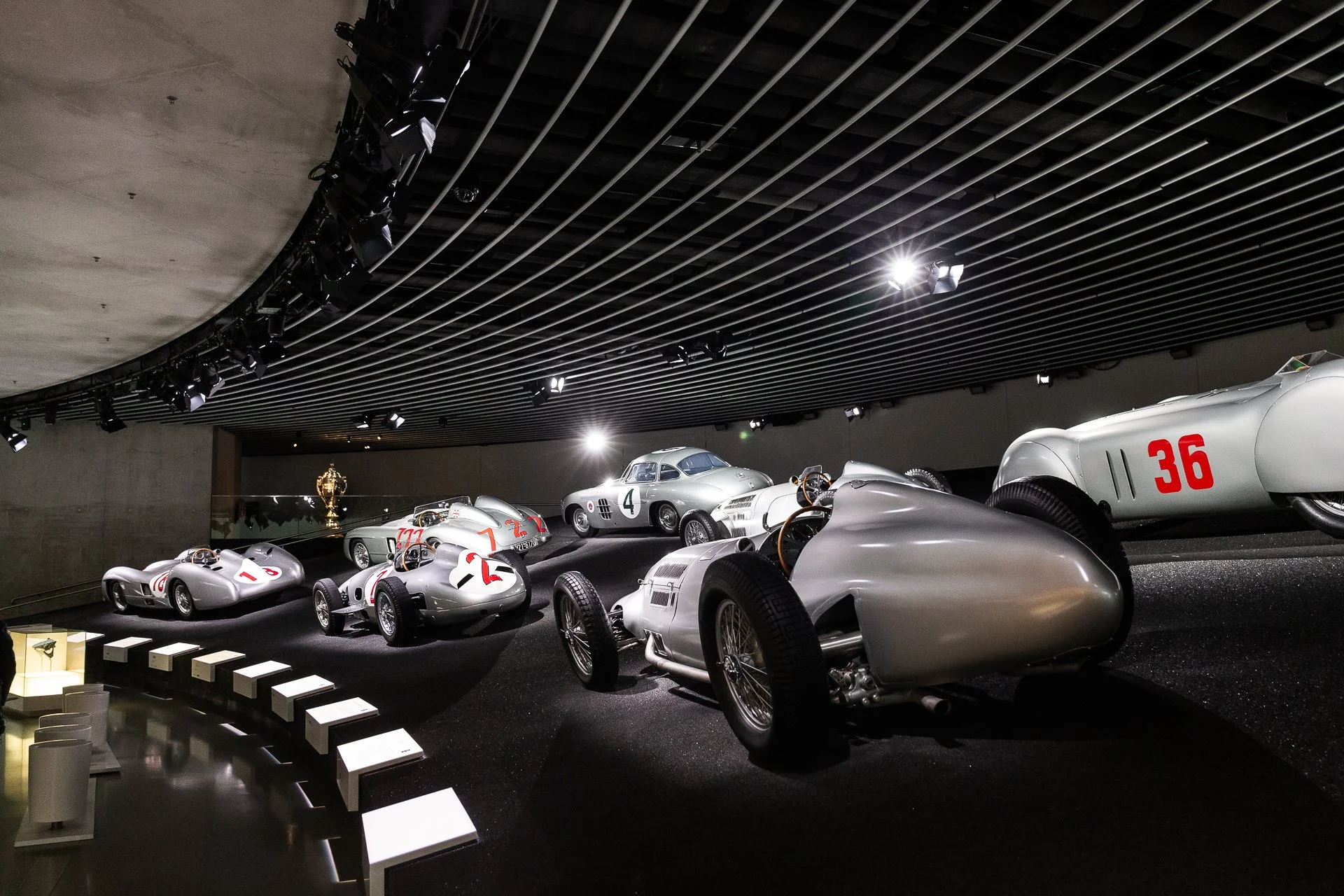
Performance vehicles at the Mercedez-Benz Museum. Image: Julien Fautrat.
In Stuttgart, the car is not merely displayed. It tells the story of its birth, its transformations, its madness, its uses and its promises. And that is why you leave the visit with the very simple feeling of having seen much more than a museum. You have walked through the very place where the car came to life.
The Mercedes-Benz Museum is located at Mercedesstraße 100, 70372 Stuttgart, Germany. Information here.












In one of Paris’ largest exhibition halls, acres of classic automotive treasures await admiration. Celebrating its 50th edition in France, writer Dan Latif and photographer Julien Fautrat show and tell the story of Rétromobile ahead of its New York City debut later this year.